Has post-pandemic household maintenance changed anything about our habits and customs? What lessons will we learn?
I've worked in this field for over 35 years. During my studies, I started as a housekeeper. I then progressed through various roles, including supervisor, special projects manager, trainer, sales and purchasing manager, and general manager. Finally, I landed my current position as a self-employed consultant and trainer in the housekeeping industry. This allows me to hear and see firsthand the perceptions of both housekeeping staff and managers. Unfortunately, across all sectors, with a few exceptions, housekeeping staff have largely been mistreated. I would even say they're seen as the least important department, the one looked down upon, and the area in which the least investment is made.
We started to notice the work of the employees
Since the beginning of this crisis, we've started to notice them. Most employees have even told me that since then, people say "hello" and smile at them… At the beginning of the crisis, some thanked them for their efforts.
Wow, what an evolution…!
We bought equipment such as the microfiber cloths … It was about time, let's say …
Daytime working hours have been increased to allow for disinfection during peak hours, and I'm told it's expensive. Often, the necessary training isn't provided. At worst, a short one- or two-hour training session was sufficient. And this is despite the fact that’no other training It hasn't been given to them for so many years.
We sometimes bought electrostatic sprayers for disinfection. The rest of their equipment hasn't changed at all. So, the The cleaning cart, 15, 20, 30 years old, has remained the same. They're scratched, worn to a frazzle! Yet it's the’the most regular and most used basic equipment And it's used to clean all the spaces. They're still running and "doing the job," I'm told!
These are low-level, unqualified employees
Some building managers told me they were surprised to see so much resistance from employees when presented with a new way of doing things. The fact remains that this is a separate class of workers, one that has been treated as low-level for so long. Those without diplomas or proper education, or immigrants without diplomas recognized in Canada, are steered toward manual labor. When you watch a movie or read a book with a janitor in the story, he always has a filthy old mop in his hand or an old cart full of bottles and dirty laundry. Had you noticed? During the pandemic, however, we realized just how important their role is.
However, we will always need these types of manual laborers, who clean our buildings, harvest vegetables from the land or prepare animals for ready-to-eat meals.
The budget, the budget, the budget
The first area to be cut in a budget is usually at the base of the pyramid, and particularly in housekeeping. From a reliable source, I can assure you that having outdated equipment to work with becomes demotivating and even frustrating for housekeeping staff. We're not investing in housekeeping, we're saving money to put that money elsewhere. Clean effectively at a low price It makes many people happy.
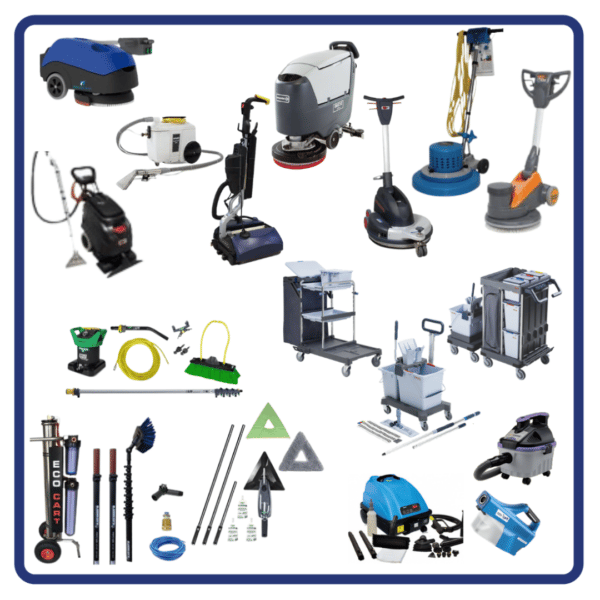
So, the equipment is generally the same as it has been for the last 30 years. Repairs are often done by the employee who's tired of asking. They end up just using tape to hold everything together! You wouldn't believe how many employees have confided in me like that!
Meh, I've reported it several times over the years, but management does nothing.
Yeah, but you know, changing our equipment doesn't bring in any money for this building; it's seen as a pointless expense. We'd rather invest in making the building more attractive or attracting more customers…
They found me this closet as a cleaning room. What can you do, there aren't any other rooms available.
Ah, training is expensive, and in the end, we've been doing housekeeping the same way for 20 years.
Shelves, it seems to me that would help you to better organize your space, right? Meh, it was like that when I arrived, and nothing has changed in the 20 years I've been here.
At least our work is being noticed now, it's better than nothing!
In fact, I realize that manual laborers are generally treated this way. Last week, I read an article about employees being mistreated by a food industry employer. It was outrageous.reference to this article ). In my opinion, It doesn't work This type of boss is disrespectful of his employees, who nevertheless allow him to have a thriving business.
It revolts me to hear this in 2021. But how can we make it change?
From now on, we can change our perception and our ways of doing things
In general, it's true that not all housekeeping employees have a high level of education. Some employees do have advanced degrees, but they still chose to work in housekeeping. Immigrants often lack formal qualifications. recognized In Canada, other employees have become disheartened by the pressure in their well-paid jobs or have fallen ill and had to retrain for another profession. There are those employees who are dyslexic or who lacked the necessary support during their youth to succeed in their studies. And there are also employees who simply enjoy doing housekeeping.
Let's treat them with respect
 Let's ask them if they have an opinion on what could improve their working conditions. But let's really listen to them, taking the time we need. I swear to you, a pay raise won't be the most important argument.
- Let's stop turning off the air conditioning in the summer during the big clean-up in schools.
- Let's remember that deep cleaning is physically difficult and let's encourage them, talk to them, with a good coffee, a hot chocolate, a smoothie, a muffin.
- Invite them to the company's annual party and integrate them into the full team of building employees.
Let us consider their expertise in the hygiene and sanitation of our buildings.
- Try to determine which equipment needs to be replaced.
- Ask them how they got injured the last few times (without blaming them). How could they avoid these kinds of injuries in the future? There are so many new, good, ergonomic, and safe pieces of equipment on the market now. I talk about several of them on my blog, by the way.
- For example: Learning to dance with a mop;
- there presaturation method eliminates the need to wring out laundry
- THE washing windows with pure water It allowed us to do excellent work without using lifting equipment, in addition to reducing working time and being a safe method for employees.
- The Stingray set for interior window cleaning It also made it possible to no longer use ladders and stepladders.
- All the technologies that simplify our lives for floor stripping and refinishing techniques, such as the REV technology, THE Maroon stamp, THE twister stamps.
Let's take care of their health and safety
- Are they wearing their PPE? No? Perhaps it's because their PPE isn't comfortable or adequate? Go check them out. PPE that we find relevant for the housekeeping sector. In this regard, you will even benefit as a company since you will save money by paying less CNESST fees.
- Go check out their janitorial carts, their housekeeping premises.
Ask yourself these questions honestly.
- Would you like to work yourself with their equipment, their trolleys, in their assigned maintenance facilities?
- Are you comfortable working under their conditions?
- Are you comfortable working in hygiene and sanitation with the training they have?
- Would you be proud to practice this profession, with the respect shown to you?
You don't know how or where to start?
Contact me; it would be my pleasure to contribute to improving the working conditions of your hygiene and sanitation team. And I would commend you for wanting to make a change. Inside, I'll be saying, "« YES, we made progress today! »
Articles on a related topic