- Are our equipment and accessories ergonomic?
- Do we use eco-friendly products?
- Do our methods respect a safe way of doing things for our bodies?
- Are your employees aware of the methods that allow them to safeguard their health and safety? What are we doing to prevent accidents?
Unfortunately, I see the health and safety of our workers put to the test all too often. And this isn't usually due to bad will on the part of workers and management. Tasks are often done automatically. When an employee has to be absent due to illness or an accident at work, that's often when we realize we need to improve our methods and reorganize our housekeeping department. So, in this article, we'll consider what we can change to improve this aspect.
Washing equipment
Oh my, I see so many old, crooked pieces of heavy equipment dating back years... unknown. We have every reason to refresh our equipment. Manufacturers are striving to make equipment that is increasingly ergonomic, lightweight, easy to maneuver... and more efficient! Many times I see...
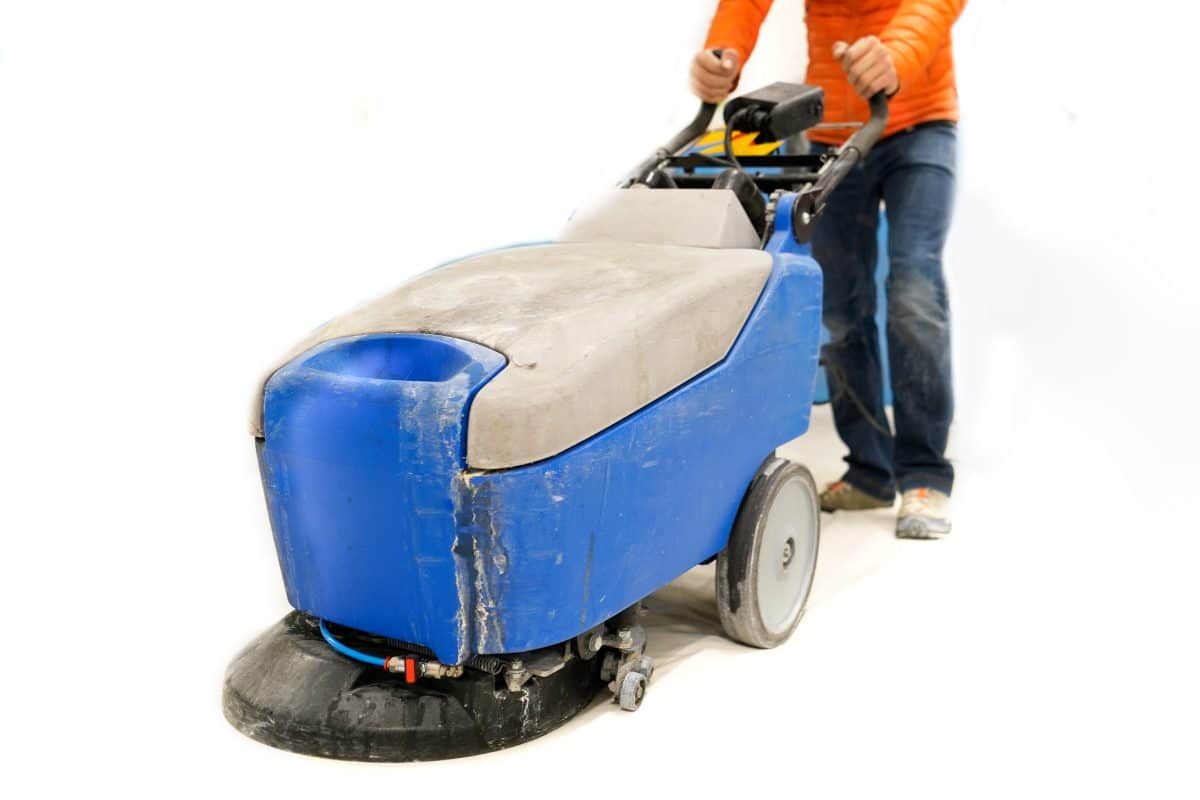
- Scrubbers with a crooked, dirty scraper and a broken structure.
- Polishers with exposed electrical wires in some places! This equipment is used on wet floors!
- Unprotected sharp blades lying around on the shelves in the cleaning room
- From food mixed with washing products and accessories
- Garbage left in the maintenance room
You think this situation happens rarely? Oh boy... unfortunately, it's very common. So, evaluating your equipment fleet every year can be a win-win. We sort through what's good and what should be recycled. And we take the time to shop for THE best equipment for OUR needs. There are so many great innovations every year in home maintenance. Don't always buy what you used to buy. Take the time to see what's best out there.
Washing accessories
The order of the maintenance rooms is often very picky!!! So, before purchasing, it's important to put the room in order. In addition, favor safety accessories. Organize the maintenance room to keep it tidy. For example, install wall racks for handles. All good distributors have this type of accessory, or if not, the hardware store will be able to equip you properly. Require employees to always keep their room tidy and the products, accessories, and equipment in their proper place.
- Follow certain storage guidelines. For example, liquid products should be placed at the bottom of the shelves and accessories on the upper shelves. Hand towels and toilet paper should not be placed below liquids.
- Scrapers with detachable, breakable blades should be avoided in my opinion. Too many employees injure themselves with this seemingly harmless accessory.
- Recycle broken accessories or have them repaired.
Washing products
When I started out in household cleaning as a teenager, we were in the era of products that made you choke just by opening the cap! Many years later, we saw the arrival of ecological products. Very few were effective at the beginning. However, I will say that in 2019, we have an excellent offer from chemical manufacturers who have worked hard to achieve good quality. On the other hand, the older generation, accustomed to very powerful products, are often reluctant to use products that are pale in color, written ecological on the label and that do not have a smell to fall on the back! Some still think that the best cleaner is still pure bleach….!
The best way to counter this kind of problem is to thoroughly clean the products available in the cleaning rooms. And of course, solid training works wonders for reluctant employees. Every time I train experienced employees, I see the wariness on their faces in the morning.
- What is she going to tell me that I don't already know?
- I already know all this, I don't need training...
- Our methods worked before, why is it no longer good today?
And in the afternoon, I see the attitude of these employees change and open up. Because they took the time to stop and see the results. And even to experiment with the new methods and technologies. They see that the new methods protect their health and that they are truly cared about. That they will have to exert less effort or work in difficult conditions!
Our working methods
At the commercial, industrial, and food level, our work methods are far from being similar to house cleaning! Many factors influence our quality of work, the products, accessories, and washing equipment, and our methods:
- Traffic will determine the washing frequency
- The clutter in a room will either make washing more efficient or less effective.
- The type of customer can also push us to make better decisions.
- The number of hours worked and the number of employees available.
First, I believe it is very important to have work routes that clearly describe the tasks to be completed and the frequencies. In addition, the work sequence should be optimized. Employees go back on their steps because their work sequence is inefficient (wasting time).
But the biggest accidents at work are often caused by employees wanting to do a good job, save a few minutes, or do more... For example, when you're washing a wall with both feet on the floor, it's very easy to hurt your back if you don't have a good working method!
Everything goes through training
You'd be surprised how mechanically janitorial staff work, the way they've always done it. They don't ask questions, they don't have the time. accident prevention goes through training. Consider doing at least one training on health and safety in housekeeping. You will benefit from prevention, rather than paying high CNESST fees because your accident rate is too high!
A good one training should contain solutions to poor interview techniques. It should lead the employee to think rather than act mechanically.
Safely yours!