
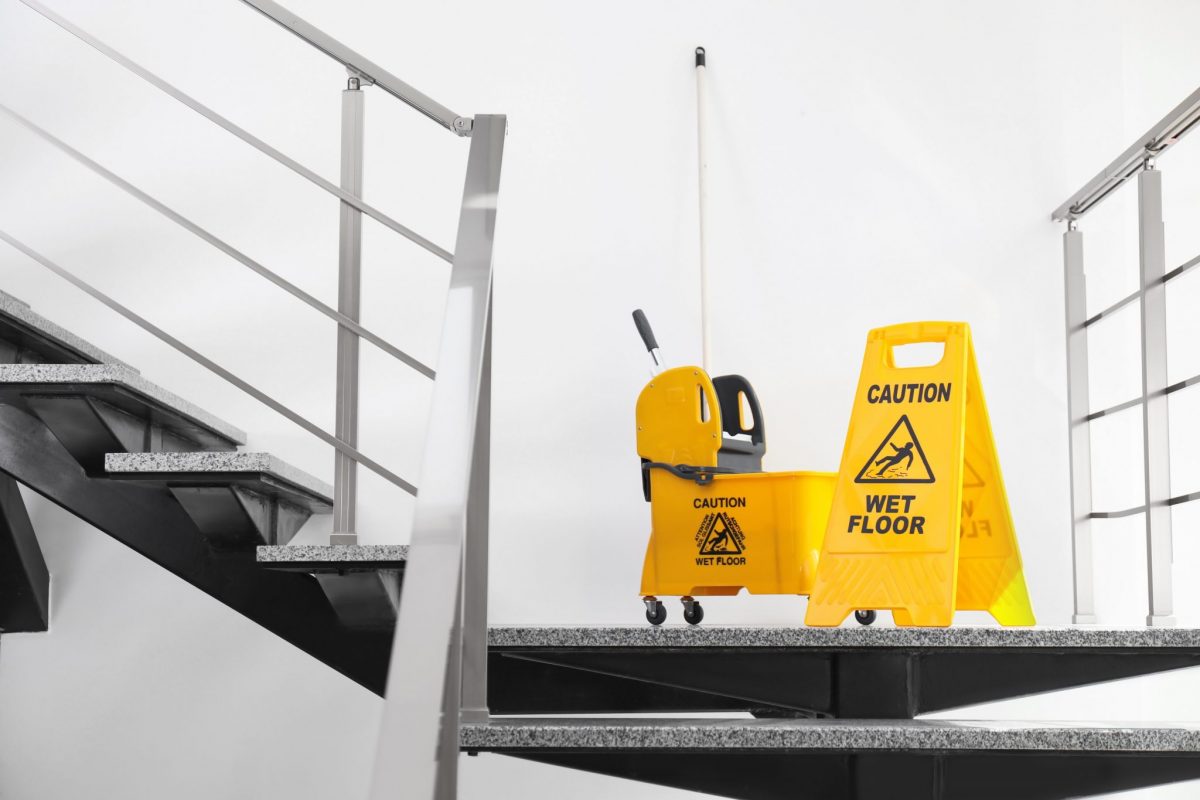
The job of a housekeeper is very physical. In fact, we're almost always on our feet and moving. Therefore, we must plan several accident prevention activities to ensure the concepts are properly understood. Here are some points you could discuss with your employees.
The back, often mistreated in housekeeping
- Work with good foot and body position, which promotes stability. If you're washing a wall, for example, wash the surface in front of you. Don't overextend your back or perform acrobatics.
- When you need to lift an object, bend your knees, not your back. And even when lifting a bulky object, ask a teammate for help.
- When walking, take your time getting from one place to another. When we're rushing, we often don't look where we're going!
- Always clear the floor to prevent falls
Breathing problems in hygiene and sanitation
- Compliance with the dilution of chemical products is mandatory.
- Never mix 2 products together, this can cause fumes or other unknown problems.
- Try to eliminate powdered, spray-canned, and vaporizer products. These have been replaced by equally effective products by chemical manufacturers.
- Ecological or organic products are highly effective. There's no need to resort to the old technology where we choked when we opened the lid.
- Wearing a protective mask may be necessary. Consult the product safety data sheet.
Hands must be protected
- Make a habit of wearing chemical-resistant gloves.
- When you have to transport heavy materials, be equipped with non-slip gloves.
- When transporting heavy products, why not ask a teammate to help you?
- Since we often have our hands in water, our hands can become dry. There are excellent hand creams available from chemical manufacturers.
Take care of your feet
- Never work in flip-flops, high-heeled shoes, or any other open-toed shoes. Never!
- Shop for your shoes! Since we're always on our feet, you need good footwear. Athletic shoes are excellent.
- Have a balanced position on your feet and knees.
- If applicable, wear safety shoes that meet regulations and are comfortable. These should be mandatory, especially when working at height or on floors.
Cover your body
- Even if it can be hot, you need to cover up with clothing. These should be chosen with the primary criterion of being breathable.
- Put socks in your shoes.
- If necessary, for example when pressure washing or washing with hot water or highly acidic or alkaline chemicals, you will need to wear a coverall.
- No skirts, tank tops, or shorts. No holes, graffiti, or skulls on your clothes. Be professional.
The apple of your eye and your ears deserve your concern
- When using chemicals, you should protect your eyes with safety goggles. Make sure you have comfortable, fog-free goggles.
- Do not tolerate excessive noise. If necessary, wear earplugs or earplugs depending on the situation.
- For some chemicals, you'll have to wear a half-mask or full-face mask. It's not pleasant, but it's better than losing your life!
Be warned!
- It is your company's responsibility to keep safety data sheets in the workplace. And they must be up to date.
- Make sure they are on hand and that you understand the function of each product. You need to know your products, what they are used for, and where they fall on the pH scale.
- You are entitled to be trained on the WHMIS 2015 rules.
- You must be taught proper working methods so you don't make mistakes that could cause health and safety problems. Ask if you're not receiving the information you need.
- If you are asked to do a task that you consider unsafe, you have the right to refuse. Suggest a new, safer method.
Other information tracks
- PPE: Personal protective equipment, CF Sanitation
- The pH scale products, CF Health
- THE cleaning products that I suggest you eliminate, CF Sanitation
- Prevent human errors causing injuries, CF Sanitation
- Building Maintenance Health and Safety Guide, CCHST


