
A building can appear clean at first glance and still conceal significant problems. The trash cans are emptied, the floors shine, but the doorknobs, light switches, and corners are overlooked. How can you know where you truly stand?
Signs to watch for
- The complaints always come back to the same places. A bathroom, a meeting room, a corridor: the problem is never solved for good.
- Dust accumulates where we don't look. The tops of door frames, baseboards, air vents, and under furniture. This dust impairs air quality and can cause allergy problems for occupants.
- The points of contact are forgotten. Handles, switches, handrails, elevator buttons. These are the most touched surfaces, and often the least cleaned.
- The corners and edges are dirty. The center of the floor is clean, but not along the walls.
- The quality varies from day to day or from employee to employee. This is a sign that a clear method is lacking.
- Periodic tasks are never done. Washing interior windows, dusting at height, stripping floors.
Clean to the eye does not mean clean
A surface can appear clean but not actually be. This is especially true for high-touch surfaces with a high risk of contamination. To verify that they have truly been cleaned, we use a marker whose date is only visible under UV light. If the date has disappeared, the surface has been cleaned. Otherwise, it has been missed.
How to measure cleanliness objectively
To move from printing to measurement, a method is needed. Here is ours:
- Classify the premises by prototype. Offices, bathrooms, corridors, classrooms: each type of room has its own control points.
- Evaluate each point using a simple chart: Compliant, needs improvement, or non-compliant.
- Assign a rating per prototype, then an overall rating for the entire building.
- Compare the grade obtained to the expected grade. Your quote sets a level of quality. The question is whether you achieve it.
- Photograph the non-conformities. Everyone can see exactly what needs to be corrected.
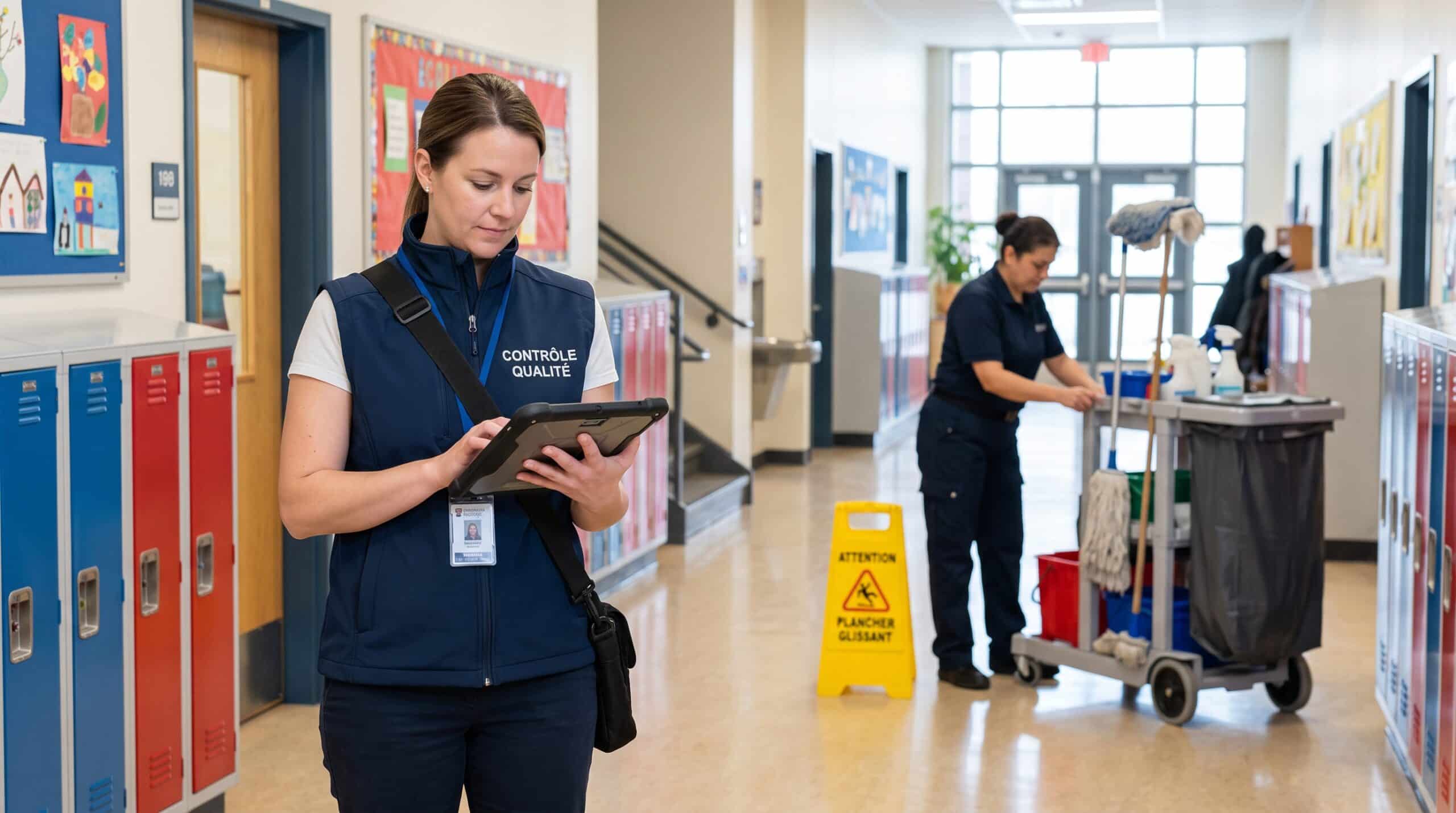
With regular visits, statistics highlight recurring problems. They can even show that the frequency specified in the quote isn't sufficient. They also indicate which employees need help, and with what: this is where coaching comes in. A meeting on-site, a demonstration of the correct method or product, and the problem is solved at its source.
Measure to improve, not to punish
The goal is not to catch your employees out. Good quality control is carried out while respecting the specifications and the employees. It serves to understand what's causing the problem and to help everyone improve through feedback and coaching.
Do you want to know the status of your building?
CF Salubrité offers a housekeeping quality control service Tailor-made. Start with an assessment visit: we visit a sample of your premises and provide you with a clear picture of the situation, along with our recommendations.
514-795-5962 (French) - 514-730-1801 (Spanish)