
Which is better? Performing preventative maintenance, repairing equipment only when it breaks, or replacing it altogether? This topic deserves careful consideration, since the quality of the work will be determined by these decisions.
Preventive maintenance on housekeeping equipment
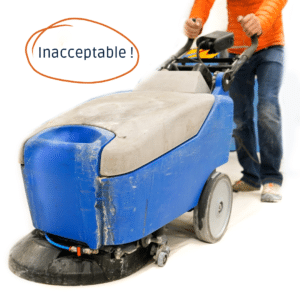
The primary goal of preventative maintenance is to maintain and even extend the life of equipment. It also allows you to work safely and keeps the equipment running at its peak. One of the worst problems that can happen in a large school is that the scrubber breaks down and there are no others to take over. The employee then finds himself having to clean the floors with a mop. I find it inhumane to wash floors with a mop over such a large area. Some mechanics will be able to lend you a replacement scrubber while the repair is being made. The other trick is to have a spare scrubber. By the way, here is an article onmaintenance of a scrubber.
I can assure you that having a scrubber that is always broken or not repaired can be enough " disgusted " an employee to make him leave for a company that takes better care of its equipment.
Let's first look at what preventive maintenance is on household cleaning equipment.
- Preventive maintenance may consist of belt change, greasing, calibration, lubrication, checking, adjustment
- Depending on the equipment, wear statistics are generally known to repairers and they can then prevent breakdowns.
- This is also a good time for the repairer to do a quick recap with the employees so they can learn how to perform routine maintenance on the equipment.
- Preventive maintenance also means, clean the equipment, the filter, the tank, the hoses on a daily basis. This is commonly missing in many places. In fact, if only this maintenance were done, there would be 50% fewer repairs! To this end, see our other article about thepreventive maintenance that could be done directly by the employee.
- The repairer will also be able to ensure that the tools are used correctly and correct the working method if necessary.
- Analyze the problem that is missing from the equipment
- Depending on the wear and tear of the equipment, a good repairer will be able to guide you on future purchases.
When to schedule preventive maintenance
Personally, I have key moments in the year when I find it essential to have the equipment checked.
- Before the period of major cleaning, often in the summer, I will have the scrubbers and polishers checked so that everything is functional from day one;
- Before Winter: The worst time of year for scrubbers to break down is winter. So, let's plan ahead and do maintenance before this time of year.
- Outside of these two seasons, it could depend on the quality of the equipment and the type of project. For example, if you have a building with floor coverings that promote the deterioration of your brushes and equipment, it would be better to have them checked a third time a year.
Inventory, codify, establish the status - for example, theWater washing equipment requires little maintenance. However, if this is not done, you will earn yourself equipment that will become less productive and less efficient!
It seems clear to me that to establish good preventive maintenance, a precise picture of the equipment fleet is required. It will therefore have:

Maintaining the autoscrubber Code the equipment, list it by building and in which room it is stored
- Not all equipment requires the same care. It is therefore best to categorize them and determine the maintenance accordingly.
- Identify the last repair made and what was done.
- Identify the months and dates for preventive maintenance reminders
- Describe the condition of the equipment, or at least its condition over time. For example, if a piece of equipment is nearing the end of its life, it's best to evaluate the costs to see if it wouldn't be more efficient to replace the equipment.
- Plan purchases accordingly
If the process is well done in terms of preventive maintenance, purchases must also be scheduled. When we have a clear idea of the state of the equipment fleet, we can also predict what will need to be replaced over the next 5 years. There are therefore fewer impulse purchases and more thoughtful ones. This does not mean that we cannot have surprises! On the contrary, it seems to me essential to be on the lookout for innovations. These very often save work time. I remind you that it is not the equipment that is expensive, but rather the labor time, which represents 65 to 70 % of the cost of housekeeping.
Besides, since a piece of equipment is supposed to serve us for several years, it is better to take the time necessary to select it well. See this article entitled " clean effectively at a low price" .
The bureaucracy…
Some companies have a truly extensive repair process, and some maintenance jobs can take weeks to get the famous work order to complete the repair. During this time, employees wait and wash floors by hand. This can result in a workplace accident, which won't really pay off! There's also the risk of losing motivation among good employees and seeing them leave for companies that take their work more seriously.
With preventive maintenance of equipment, we understand that prevention is better than cure!
For your information, CF Salubrité has several repairers with whom we successfully deal for the benefit of our customers. Contact us If you need repairs on any household cleaning equipment, we will be happy to help you resolve this problem.


