What is the connection between water fountains and… plants?
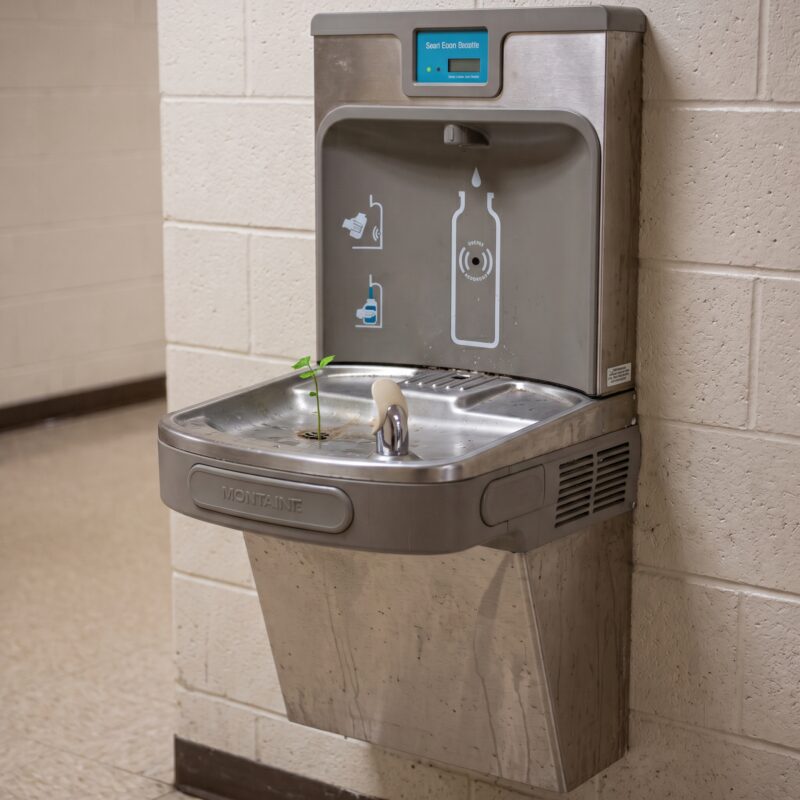
One day while I was doing a quality control check in a school, I saw a beautiful plant coming out of the wire mesh hole of the water fountain! I wondered what to do! After consulting, we concluded that the best maintenance to do at the time was to unscrew the front door of the drinking trough, remove the excess soil that had formed over the years, and then spray with a cleaning solution based on enzymes and bacteria.
This story illustrates one thing: a fountain that's only superficially wiped will eventually accumulate organic matter where it's not being looked at. And what grows a plant can also feed bacteria and cause odors.
Daily maintenance
To be done at the start of each shift:
- Clean the basin, the mesh and the area around the drain to remove residues (gum, saliva, deposits).
- Wipe the stainless steel with a microfiber cloth and a biotechnological cleaner, always in the direction of the grain.
- Disinfect contact points (buttons, levers, sensors, front of device) with the same biotechnological cleaner.
- Don't forget the bottle filling station: the nozzle and filling area are touched by dozens of bottles every day. If there's limescale buildup, apply a biotechnological product formulated to remove it. One of my favorite products for maintaining water fountains is Nu Bio Scrub. Nu-Bio Scrub (Manufactured by InnuScience) is a biotechnological descaling cleaner designed to remove limescale, tartar, and soap residue.
The monthly interview
Once a month:
- Remove the grate and thoroughly clean the basin and drain with an enzyme and bacteria-based product. These products continue to work in the drain, preventing deposits and odors.
- Check the flow rate and height of the water jet.
- Check the filter indicator (on filling stations) and have it replaced according to the manufacturer's recommendations.
- Report any leaks or standing water to building maintenance.
Avoid
- Abrasive products and scouring pads on stainless steel: they scratch it and promote the accumulation of dirt.
- Unrinsed chlorinated products, which can stain and corrode stainless steel.
- Use the same linen for the fountain and the toilets: respect your color code.
Biotechnology in the service of maintenance
There biotechnology has significantly improved housekeeping, in conjunction with gentle chemicals. These products clean deeply, are safer for staff, and less harmful to the environment. You will also find another article on our website about controlling unpleasant odors using this technology.
Need help with your maintenance routines?
CF Salubrité offers training and quality control for cleaning teams: municipal, school, hospital and industrial.
📞 514-795-5962 (French) | 514-730-1801 (Spanish)