
Dusting or washing? That is the question!
Which is better? Dusting or mopping? Dusting and mopping? I want to challenge your beliefs today! If you only knew how many times I have to correct the record on this subject... Anyway, I think this topic requires clarification.
In fact, both tasks are important and worthwhile. The choice depends on your goal and your task organization.
Do you just want to remove dust or do you want to remove bacteria and dirt too?
Dust, It removes the accumulated dust, that's all.
Wash, With a chemical cleaning product, it removes dirt, fingerprints and bacteria.
When should you dust or wash?
I suggest to dust what is high up, over 6 feet tall. And if you are in your home or office, a monthly dusting from a height would be sufficient (we don't put our fingers on the ceiling after all!). Simply remove dust from light fixtures, fans, frames, wall borders, that's enough.
The kitchen, the bathroom in the office and the entrance to the building should be washed every day since they are part of the common areas. So bacteria from both are present there (including those from employees who do not inform their coworkers that they are sick).
Housekeeping quote
For complete building maintenance, I always suggestestablish a housekeeping estimate of all the tasks that need to be done in the building for the entire year. This should include the tasks to be performed, their frequency, and the areas that need to be maintained.
Work route
From this document it will be easy to establish the Work route (per employee if you have multiple employees maintaining your building). Work routes are used to indicate to the employee the route and tasks they must complete each day. You could even indicate the order in which you want the tasks to be completed. Pay attention to the order to avoid your employee having to retrace their steps and waste time.
Since some tasks will need to be done once a week and others several times a week, try to balance the days. However, despite this work schedule, it seems important to me to do a starting lineup to any new employee to ensure they understand our instructions.
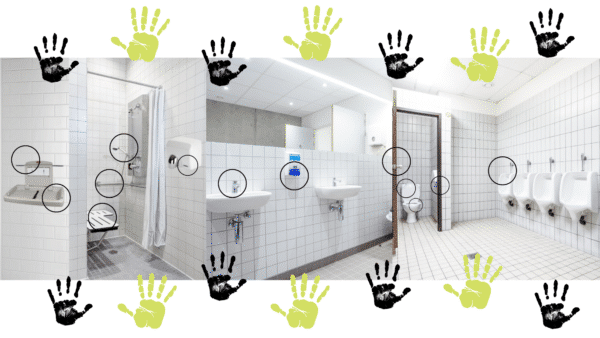
Of course, if you have a bacteria that persists in your building (gastro, flu, etc.), I suggest you focus on cleaning spaces instead. Particular attention should be paid to common areas, such as the cafeteria, entrance, bathrooms, changing rooms, etc. High-rise spaces seem secondary to me at these times.
During this period, I also suggest you clean the spaces more often high touch, that is, the places where the majority of people put their fingers – See this article on theidentification of contact points (High Touch). In fact, if you can afford it, I suggest a wash high touch after all breaks and meals during times of flu or gastroenteritis for example.
With what tools?
I will first answer to use a fabric made of microfiber since it retains dust better and has a more effective cleaning power. In addition, this type of cloth does not leave lint.
Please note that it is recommended to use different colors of cloth. This will prevent cross-contamination. All staff in the same building should use the same cloth. color code. This article about the will surely interest you.
Here is the color code I suggest to you
- Blue : Office, lounge, conference room furniture
- Red : Toilets and urinals only
- YELLOW : Everything in the bathroom EXCEPT the toilet and the urinal
- Green : Cafeteria, kitchenette and coffee corner

For dusting, I would banish those cheap dusters sold in stores. They look nice, but they just move the dust around. Opt for microfiber; you'll be surprised by the results. My favorite is the Rubbermaid microfiber duster, the white one. Here's a video about it, by the way.