
Washing frequency: what factors should be considered?
The frequency of cleaning different areas of a building depends on several factors. Conditions vary from building to building, as do the employees, the equipment used, the type of clientele, the floor coverings, and the activities that take place there.
Let's look together at the main factors to consider when establishing an effective and appropriate maintenance frequency.
The type of building and the clientele
What type of building needs to be cleaned? An industrial manufacturing plant? A shopping center? A food processing plant? An office building? A school, a daycare center, or a senior citizens' center?
Each of these environments presents its own particular challenges.
Industrial manufacturing plant
In an industrial manufacturing plant, garage doors are often open, which brings a lot of dust into the building. This dust is then transported by forklifts, pedestrians, and employees moving between the inside and outside.
Floors, surfaces and furniture should therefore be dusted daily to prevent accumulation.
It is also recommended to install mats or devices allowing employees to clean their boots, particularly at entrances used by factory personnel.
Factories often also include administrative offices. Between the factory and the offices, it's best to install scraper mats on the factory side and absorbent textile mats on the office side. These mats should be vacuumed daily to prevent them from quickly becoming saturated with dust and dirt.
You will surely appreciate our article on specialized cleaning in industrial plants. specialized cleaning in industrial plants.
Mall
In addition to the necessary entrance mats, it's important to consider that, in a shopping mall, customers' tolerance for dust and dirt is generally very low. A lack of cleanliness can even lead to a drop in foot traffic.
Because a large number of people enter and exit this type of building every day, more frequent cleaning is necessary. High-touch surfaces, also known as frequently touched surfaces, must be cleaned regularly during opening hours.
This includes, in particular:
- door handles;
- the ramps;
- the switches;
- the counters;
- bathrooms;
- food service areas;
- ATMs and cash dispensers.
Food factory
In a food processing plant, the requirements are even higher. In addition to entrance mats and frequent cleaning of contact points, a well-structured prevention program must be implemented.
This program should include:
- daily washing;
- weekly washes;
- large-scale periodic works;
- cleaning at height;
- cleaning of washing equipment and accessories;
- maintaining rigorous documentation;
- regular quality control.
Employees responsible for washing must complete the required documentation to confirm that the tasks have been carried out according to the established frequencies.
It is also necessary to regularly check whether the cleaning frequencies are sufficient to maintain an adequate level of cleanliness on the various surfaces. If necessary, the program should be adjusted.
Each year, it is important to reassess the maintenance program to ensure that it remains effective.
High-level cleaning is also essential. Dust and dirt can accumulate on structures and then fall onto food processing areas if they are not cleaned properly.
It is also important to clean daily the washing equipment, accessories, boots and shoes used in the factory.
Finally, employees should be encouraged not to show up for work when they are sick.
We also suggest you read these two articles:
- Washing items must be food grade
- Dusting and washing high-rise structures in industrial and food factories
Administrative offices
In administrative offices, carpets must be taken into account, as they trap dust and can recirculate it if they are not regularly cleaned. Frequent vacuuming is therefore necessary.
If one or more employees become infected, it is recommended to increase the frequency of cleaning frequently touched surfaces. Sick employees should also be encouraged to stay home to limit the risk of transmission.
A school, a daycare, a senior center
Children and the elderly are among the most vulnerable groups, particularly due to their more fragile immune systems. Therefore, adopting a preventative approach is essential.
Children, for example, often put objects in their mouths and don't always wash their hands properly. Infections can therefore spread very easily from one child to another.
In these environments, toys must be cleaned and disinfected very frequently. When a child is sick or has a fever, it is best to contact the parents so they can come and pick them up quickly.
It is also recommended to avoid bringing sick children to the elderly, since the latter are more at risk of complications.
Washing equipment
In all cases, it is best to use equipment that washes with clean water.
For example, with a boiler that has only one container, there's a risk of transferring dirt from one corner of the room to another. Even if some of the dirt is removed, a significant amount may remain on the floor.
Today, there are excellent small devices that allow you to clean effectively, even in tight spaces. This article will tell you more about them.
If you cannot use a floor scrubber, it is best to opt for a dual-boiler system or a flatbed scrubber. This type of method allows the floor to be washed with clean water, while the dirty water is collected in a separate container. article will tell you more about it.
The type of place to clean
Common areas need to be cleaned more frequently than an office occupied by a single person.
The common areas include, in particular:
- bathrooms;
- public showers;
- the changing rooms;
- the entries;
- the corridors;
- cafeterias;
- the coffee corners;
- communal kitchenettes;
- waiting rooms;
- conference rooms;
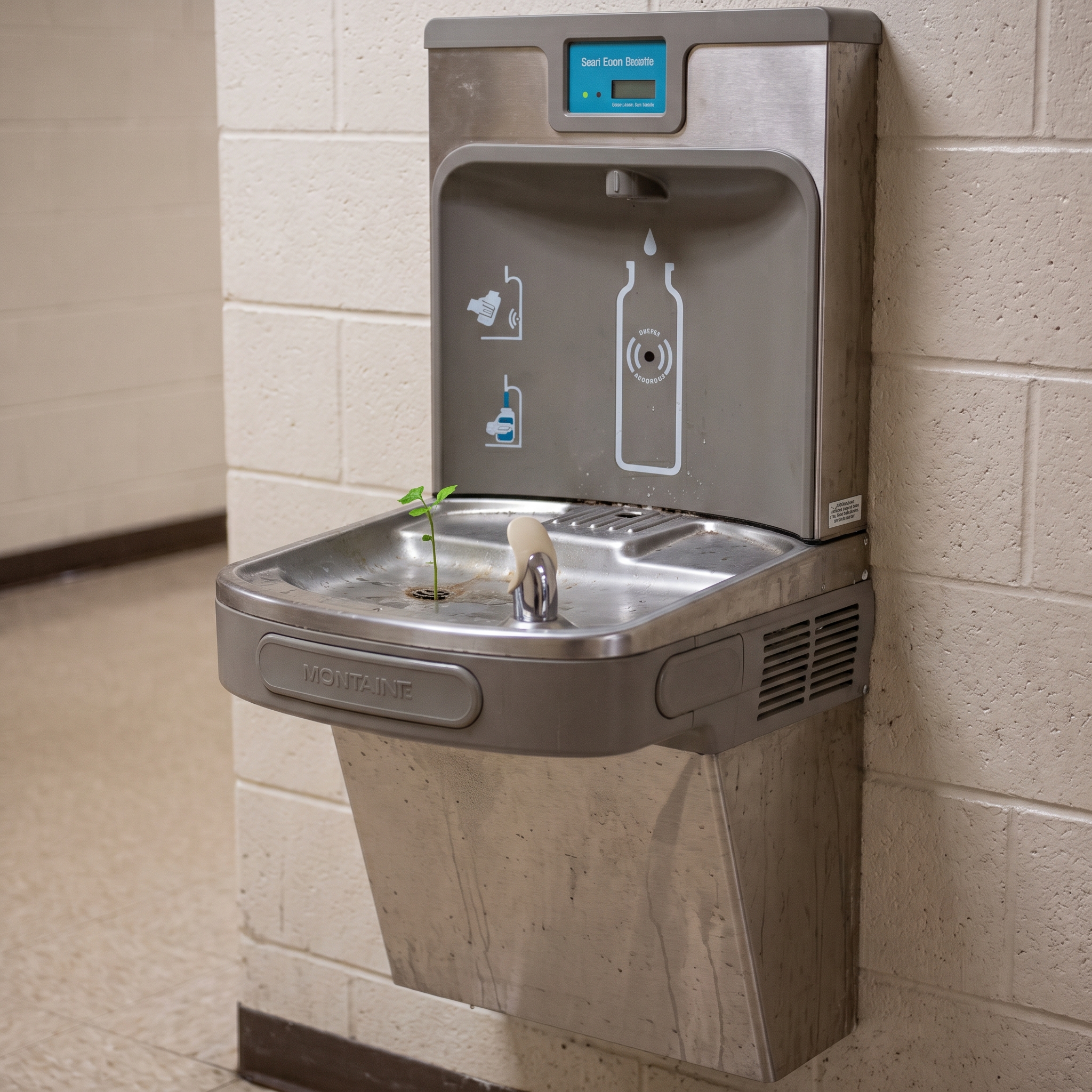
- the watering troughs;
- the elevators.
Places with higher risks
We have spoken several times about frequent contact points, or surfaces« high touch »These are the places where people often put their hands.
Let's take the example of an ATM. The base of the machine poses little risk of contagion. However, the keypad, touchscreen, and the surfaces people rest their hands on during transactions present a higher risk. These surfaces should therefore be cleaned daily, and even more frequently if necessary.