.Cleaning our own homes doesn't prepare us at all for cleaning municipal buildings. At home, we can take our time, play with our children, wash the dishes by hand… time and method don't matter.
The manager of municipal buildings must plan for:
- Washing frequency depends on customer traffic and client type.
- Plan the major cleaning activities
- The right products, accessories and washing equipment
- And how can we know if the right working methods are being used to effectively reduce the number of bacteria on surfaces?
- Roadmaps need to be developed taking into account realistic washing times, while also allowing for employee disruptions such as having to pick up a mess or set up a room for a group of citizens.
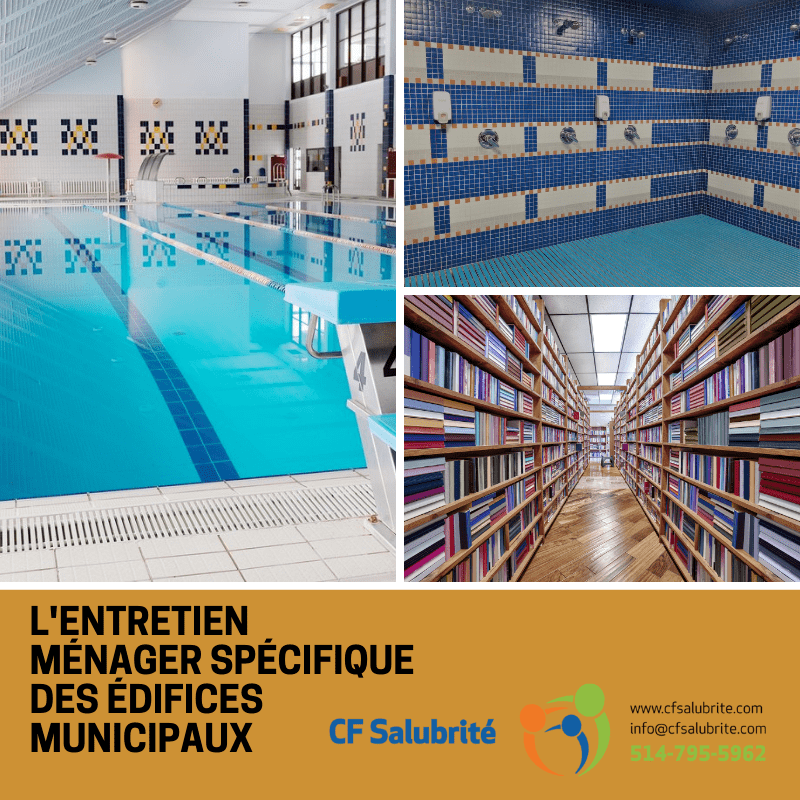
- A swimming pool, a library, or a community center are municipal buildings that don't all present the same level of hygiene challenges. For example, in the locker rooms and on the pool deck, people walk barefoot on the floor. Similarly, in a library, children are often present and touch various surfaces, sometimes even putting their hands and mouths in different areas. A single major cleaning once a year isn't enough. Daily and weekly maintenance is essential.
Here are some possible solutions to help you do your job as a manager better.
First, a A good evaluation of the products, accessories and washing equipment is necessary.. I regularly see an incredible accumulation of products in municipal buildings that haven't been used for years. Or even completely outdated equipment that slows down the employees' work. You would benefit from properly equipping your janitors if you want improved quality and efficiency.
Firstly, I don't believe that municipal building managers have a good hygiene and sanitation training And neither are the caretakers. It therefore seems essential to me to train all staff in proper housekeeping techniques. There are a few hygiene and sanitation training providers on the market, including CF Salubrité.
Plan a calendar of monthly, quarterly, semi-annual and annual activities. Wall washing, tile floor stripping, and ceramic floor scrubbing must be planned in advance. Since most of these tasks require closing off a section of the building to perform them, they are sometimes scheduled between two work periods, depending on the season. Furthermore, not all floors are stripped every year. Good building management is therefore necessary to minimize costs.
To ensure employees know effectively what tasks to perform during their shift, it is necessary to give them a work plan detailing all tasks that he will have to carry out. It would be beneficial to include visuals indicating the product, technique, and color code he will need to use for effective maintenance. These work routes must take into account realistic washing times. They must also consider the complexity of each building. A consultant experienced in this type of building can greatly assist you with this task.
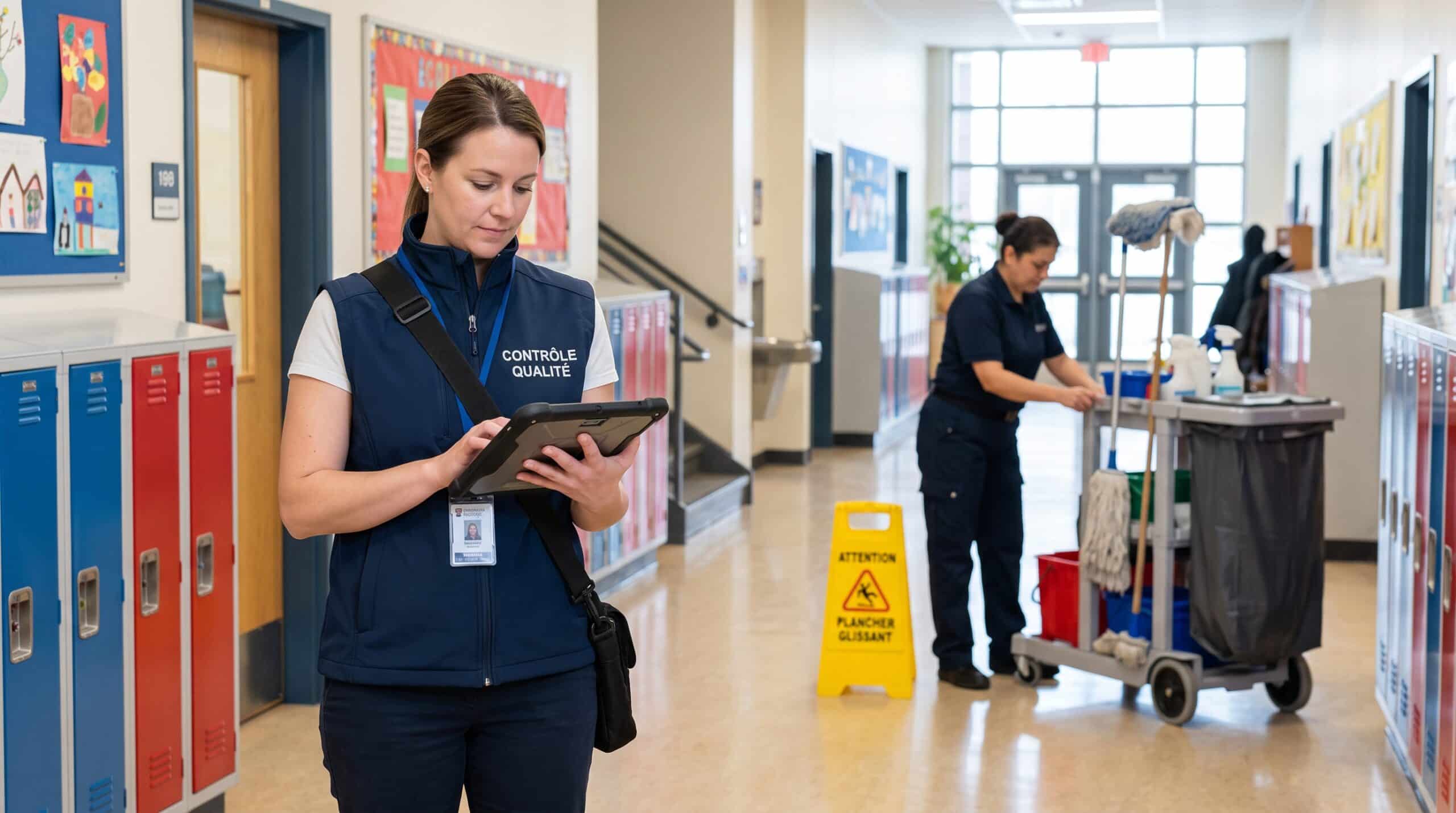
In conclusion, it is planned that regular quality control of all municipal buildings. To ensure that the entire procedure you have put in place is working, you need to check it. Infection prevention relies on surveillance. After verification, if any non-conformities are found, their nature must be determined. A consultant can help you clearly identify the problems. You can benefit from their expertise without having to hire them full-time. Consultants can be consulted only for the time necessary to properly establish your program and, if needed, afterward.
In closing, I understand that cleaning municipal buildings is a challenge that must balance budget constraints with demand and quality standards. There are ways to structure your cleaning program to reduce costs while maintaining efficiency. I am here to assist you should you need help.
Looking forward to meeting you!