
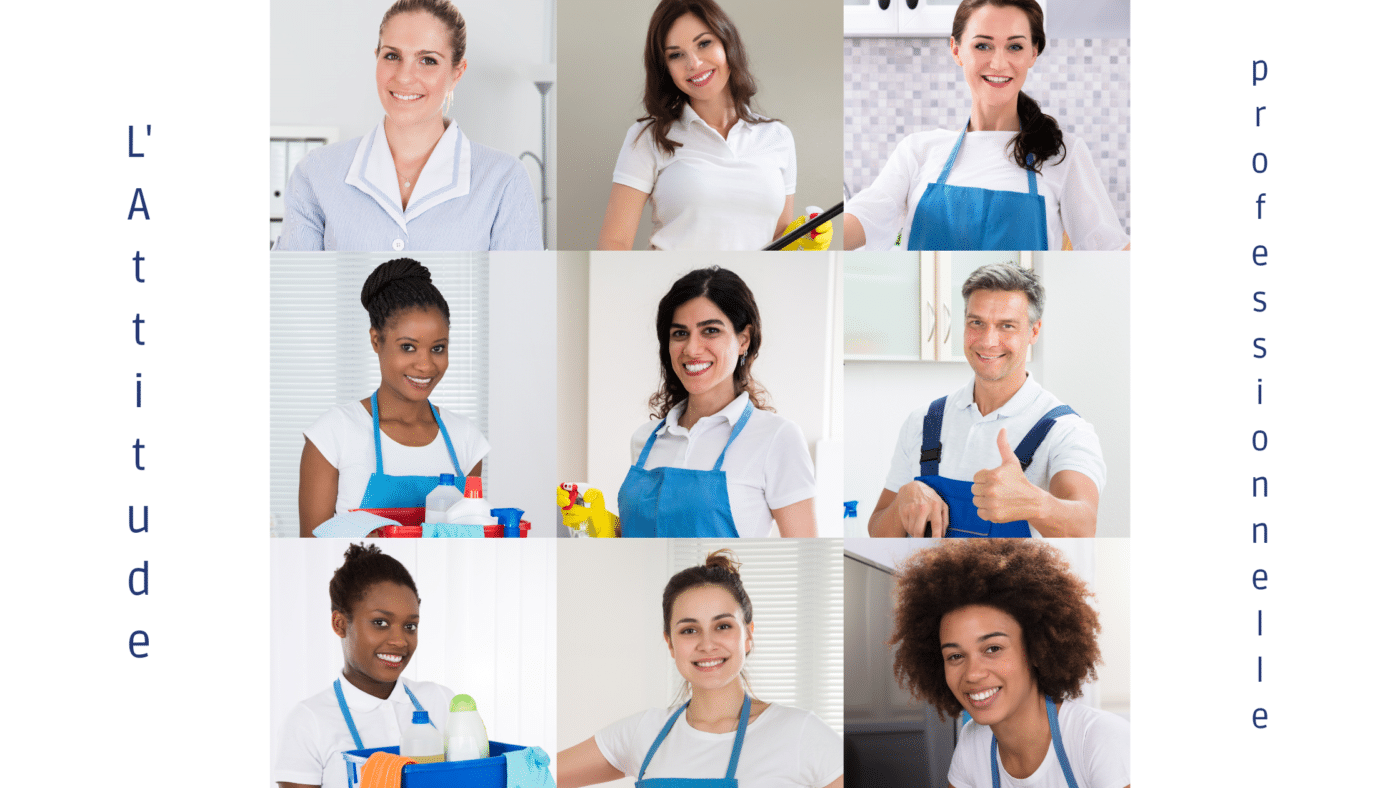
Recently, I've seen several social media posts that caught my attention regarding professionalism. Housekeeping staff, in particular, need to inspire confidence. This blog post discusses professionalism, uniforms, and housekeeping facilities.
How to address a customer
We favor the formal address rather than using the informal "tu" form, as this is a professional, not a familiar, relationship. Certainly, over time, the bond between employee and client will strengthen, but terms from the realm of family or friendship should never be used.
Examples of terms to avoid:
«"Hey thing"»
«" Darling "»
«"Men"»
Any other colloquial term
The exchange should be limited to simple greetings like "Hello" or "Good evening." If you encounter clients during your routine work, remember that they are likely busy and not looking to engage in conversation.
A uniform or not?
For my part, The uniform is essential. Cleaning staff may be called upon at any time, entering offices or accessing semi-private spaces. The uniform must clearly identify the job and the company, for example: "Cleaning" or "Hygiene and Sanitation," with or without a logo.
The advantages of the uniform
Uniform dress code for all employees
Clothing designed exclusively for work
Clear identification of the position held
Inspires respect for the profession
Strengthens public trust (e.g., identifying an intruder in a school)
Pride and a sense of belonging to the team
The housekeeping uniform
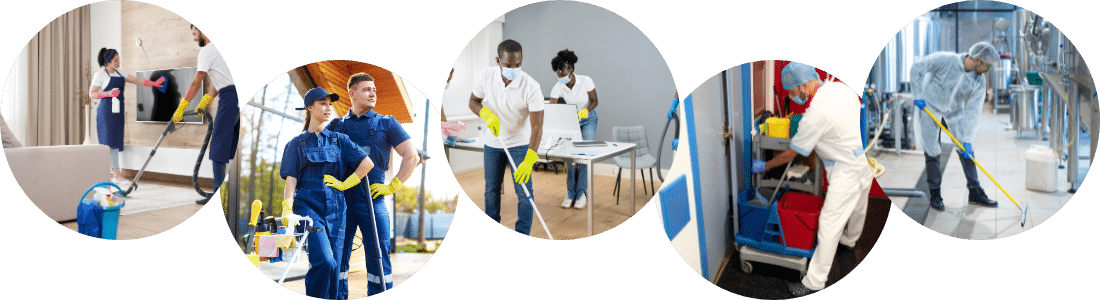
The housekeeping uniform: depending on the context
Here are some examples depending on the type of environment:
Residential Maintenance
Apron changed depending on the presence of animals or allergies
Nitrile gloves as needed
Special works (industrial, exterior, interior)
Durable, breathable, long-sleeved uniform
Shorts or Bermuda shorts forbidden for security reasons
Possible personal protective equipment (PPE):
Nitrile gloves or work gloves
Safety boots or shoes
Helmet, goggles, earplugs
The remaining PPE depends on the task to be performed.
Sales interview
Professional and breathable uniform with identification
Health buildings
Uniform of the "healthcare worker" type«
Nitrile gloves are mandatory.
Other PPE depending on the risks
Short nails, no artificial nails or Kutex
Food or pharmaceutical industry
Uniform covering wrists and ankles
Wearing a smock over the uniform, hairnet and beard if necessary
Nitrile gloves and safety boots or shoes are mandatory.
No jewelry allowed, short nails, no artificial nails
Maintenance of equipment, accessories and the housekeeping room
One of the most frequent non-conformities observed during inspections is the condition deplorable equipment and maintenance area. It is imperative to restore a culture of cleanliness and tidiness.
However, it is necessary to plan for suitable premises housekeeping is not always the case. Often, the employees are not acting in bad faith: the problem is structural or organizational.
In the future, it is essential that managers, employees, distributors and manufacturers work together to improve the hygiene and cleanliness of buildings.
Please note that this article also follows this blog concerning theethics in housekeeping. Also, the Montmorency College has developed a list of professional qualities or attitudes sought by recruitersI'm posting this list to continue fueling this discussion.
chrome-extension://efaidnbmnnnibpcajpcglclefindmkaj/https://www.cmontmorency.qc.ca/wp-content/uploads/2018/11/Liste-qualites-professionnelles.pdf


