
If there was a simple answer to this question, I would be rich! Hahaha.
In reality, several factors come into play when looking for a good housekeeper. A reliable and competent employee is, above all, someone who has learned the trade, but also developed a professional attitude essential to the quality of service. Every employee starts from the bottom. And so, there are two possibilities: Either we try to find the perfect employee, or we shape or complete the training of this future excellent employee!
I've been fortunate to work with some extraordinary employees throughout my career. Yet, very few were top-notch from the very beginning. Some were referred to me by other employees, others responded to advertisements, and several came to submit their applications spontaneously.
My number one criterion is based on a simple principle: to bring the needs of the company and those of the employee as close as possible.
- Hiring a candidate who lives too far from a contract often leads to premature departure.
- Forcing an employee to perform tasks they dislike or are not comfortable with inevitably leads to a loss of motivation.
I used to have a selection criteria form which I share in this article. Over the years, I admit I've listened to my intuition more, even though I still keep my criteria in mind. So here are a few possible solutions to help employees become top performers!
Training: the cornerstone of performance
Don't be fooled: cleaning your house is by no means a guarantee of success in housekeeping. commercial, industrial, hospital or food. These environments require skills far beyond basic domestic tasks.
The different forms of training
There are several effective ways to train employees:
- Formal training
I prefer technical and practical training that allows for the immediate application of the concepts learned. - Supplementary training
Short (a few minutes), it targets a single specific subject: a method, a product or a quick fix. - Internship
It allows for the consolidation of several techniques and their application in the field. Its duration can vary depending on the needs. - Visual aids (videos, images)
These tools facilitate the memorization and integration of best practices: Work route, illustrated work procedure, in-depth article, video, etc.
Apprenticeships: beware of potential pitfalls
Mentoring is very common in housekeeping: two employees are paired to pass on the work routine. Unfortunately, the results are often disappointing. Why? Because the good And Bad habits are passed on in the same way.
Without clear guidelines or standardization, this method can harm quality rather than improve it.
The training provides essential knowledge, particularly on:

CF Sanitation Training Room Standardized cleaning and disinfection procedures
For example, cleaning a bathroom follows a precise sequence to avoid recontamination of surfaces.- The safe and effective use of chemicals
The right product, on the right surface, at the right dosage, and with the right technique. Here's a Article to read on this topic. - Compliance with health, safety and hygiene standards
Since employees come into contact with the most contaminated areas of a building, their protection is paramount. WHMIS 2015 is a fundamental knowledge for housekeeping, but other topics also deserve attention. health and safety training what we offer is based on our field. - The proper use of professional equipment
Although the market offers a wide variety of equipment, innovation is still struggling to gain traction in housekeeping. Yet, it often allows for better, faster work and frees up time for value-added tasks. - Preventing cross-contamination
Particularly crucial in hospital and food settings, where failure to comply with protocols can have serious consequences.

To train is to explain the Why
A well-trained employee understands the Why behind every action. This understanding fosters rigorous, consistent, and safe intervention. Training also ensures consistent work quality, reduces errors and the risk of accidents, and protects both the occupants of the premises and the company.
In professional housekeeping, training is therefore not a luxury: It is the very foundation of the service's performance, compliance, and credibility..
Developing a professional attitude
It is possible to develop a professional attitude in an employee through appropriate guidance, professional training, and clear communication of expectations. Here are some key points:
Clarify expectations
Many employers implement a guide or onboarding procedure for new employees. This document has the advantage of being clear and accessible. However, the welcome must remain cordial and warm: the goal is not to discourage the new employee in the first few minutes!
This guide may include:
The procedures related to payroll and stock orders,
Health and safety standards,
Internal communication channels,
Other practical information, such as company history, department heads, team events, and any concrete information to facilitate integration.
Training to develop professional skills

Employee training to develop‘'professional attitude' It can involve communication, time management, or conflict resolution. In the housekeeping sector, some working conditions can be demanding:
Working alongside other employees requires patience, tolerance and good communication skills, as conflicts can arise.
Customer expectations can sometimes exceed the scope of agreements, adding extra pressure on the employee who wants to satisfy everyone.
Working alone on a project can present health and safety risks that should be anticipated and managed.
Positive supervision
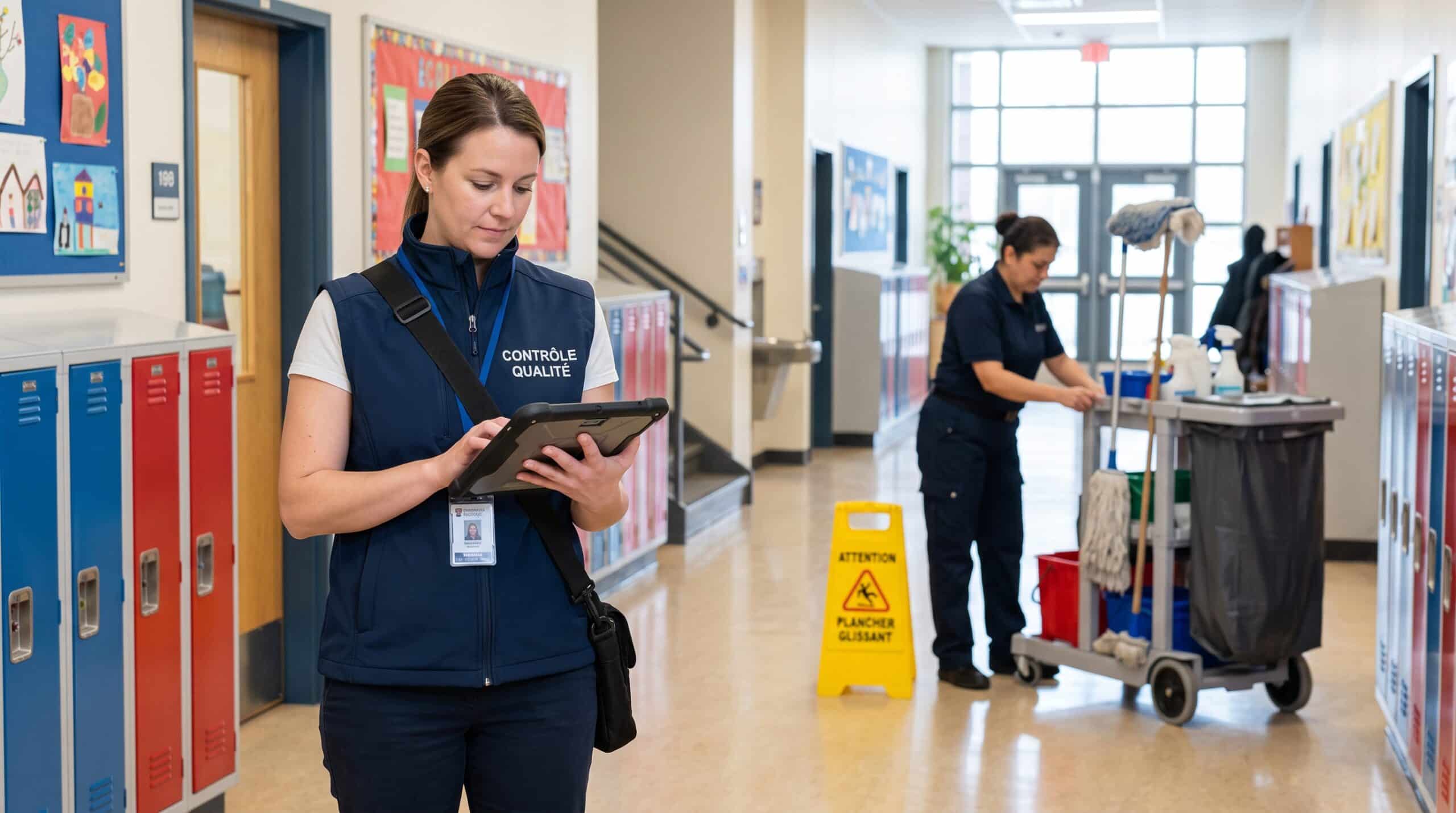
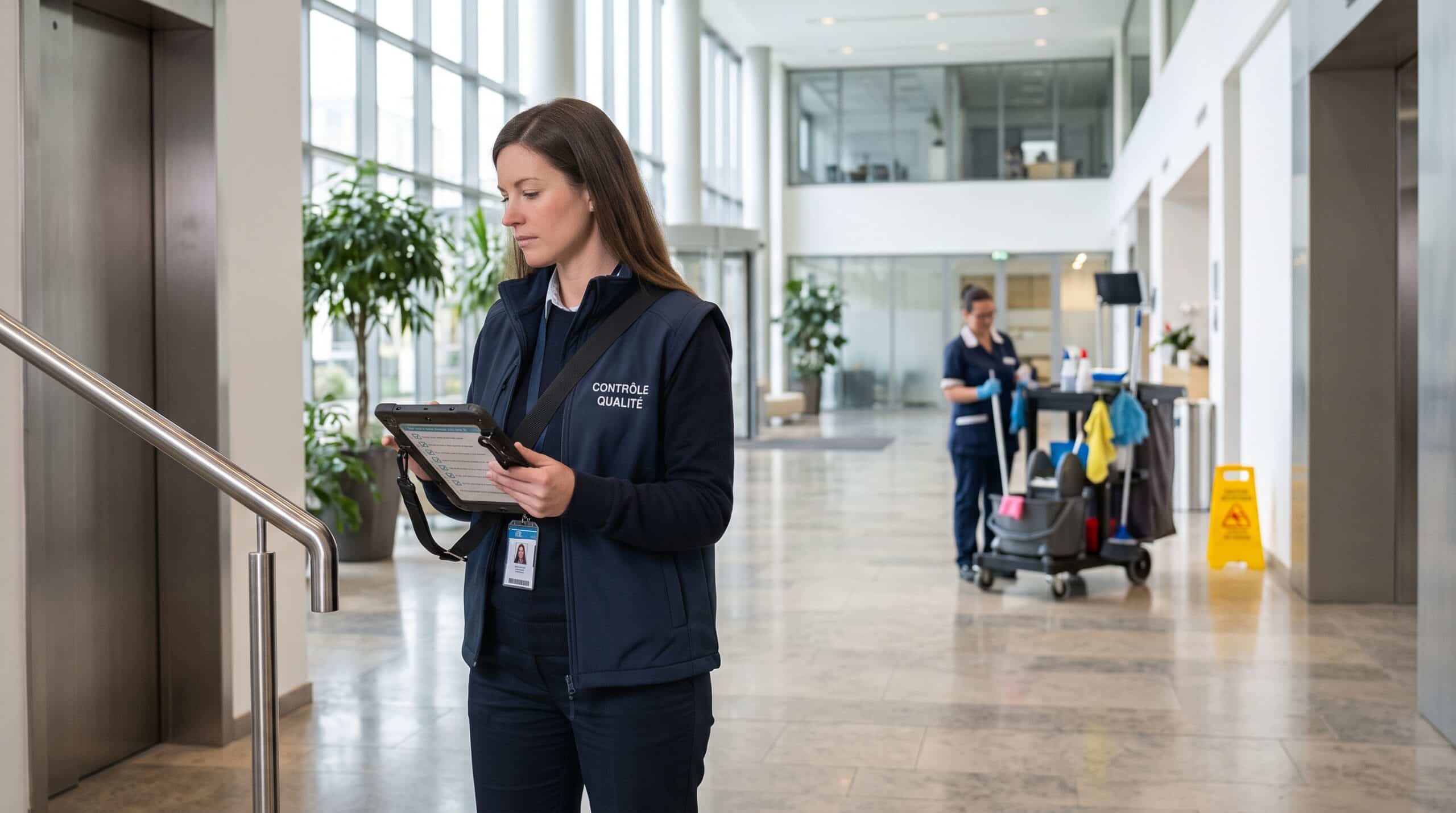
Quality control is a prime opportunity to provide constructive feedback. It allows you to:
Define gradual and realistic goals,
Provide additional training,
Highlight the employee's strengths, as positive recognition is essential to motivate and balance areas for improvement.
Give employees autonomy so they can take ownership of their work path. Encourage initiative: you'll be surprised by the solutions they can propose to improve production. Create an environment where mistakes become learning opportunities, without overwhelming the employee.
Create a strong company culture

A sense of belonging is built over time. Communicate your values and bring them to life through concrete actions. Maintain a positive and respectful work environment to strengthen employee engagement and motivation. Organize shared activities where employees and management can interact in a more relaxed setting. This could take the form of a company newsletter, an obstacle course or other team sporting activity, a painting workshop on a large model, a summer party, and many other ideas.
In conclusion, as explained in this article, the perfect employee doesn't exist! Nevertheless, I remember several employees throughout my career whom I would have liked to copy a thousand times. We got to know and appreciate each other. It reminds me of a sports team. The winning team will be the one that has learned to work together as a cohesive unit, utilizing each member's strengths.