
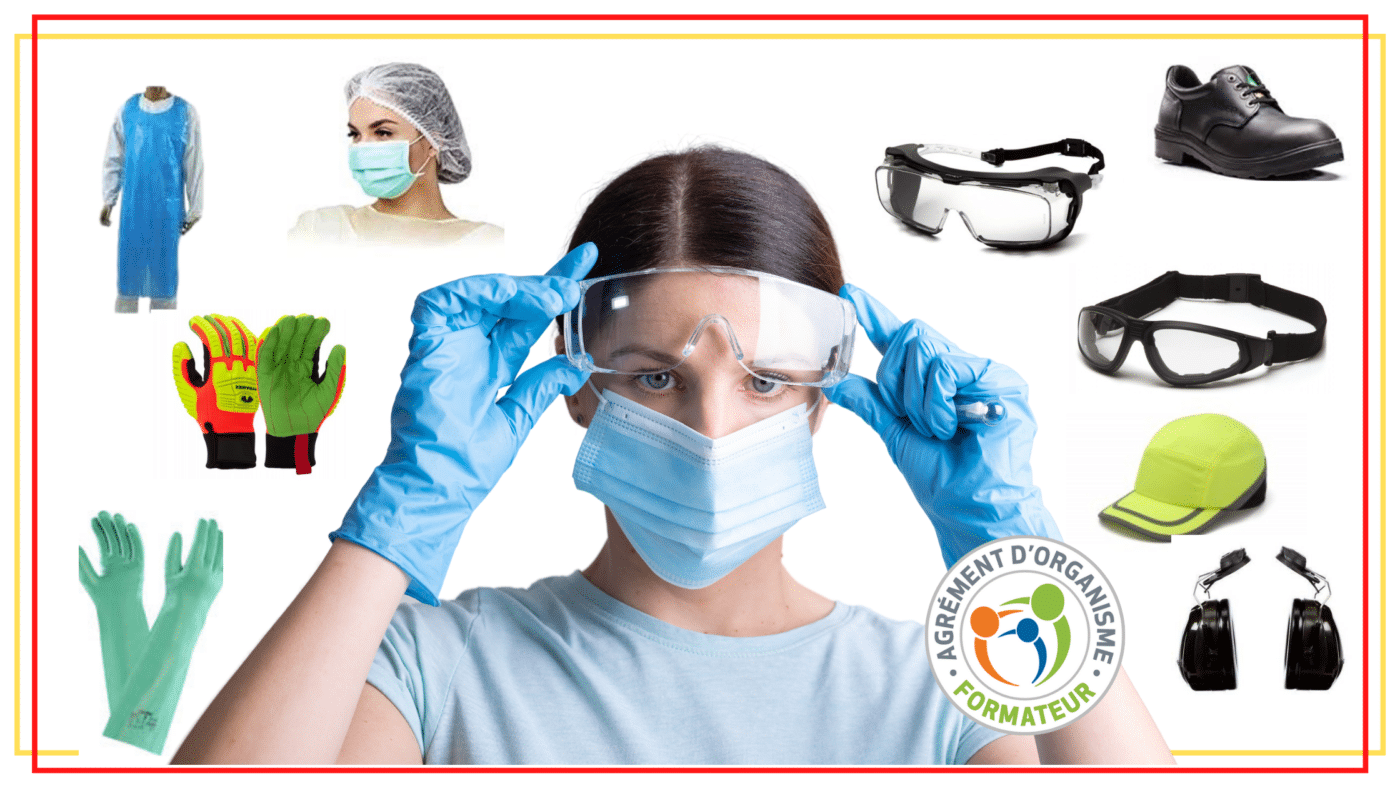
PPE (personal protective equipment) must be provided by the employer, free of charge, according to the CNESST. In addition to having to ensure that employees wear it, the employer also has theobligation to train employees on the subjectAnd of course, he has an obligation to ensure that the PPE is in good condition.
On the employee's side, they are required to wear, maintain, and use their PPE. Employees must take all necessary measures to protect their health and ensure their safety and that of others, according to the CNESST.
Recently, I witnessed a conflict on social media about this. Many people were saying that the employer is the sole responsible party for everything. I understand their position, but I don't agree. Personally, I believe that both parties must focus on the health and safety of all.
Do you have to fight to get employees to wear their PPE?
I'm fortunate to be able to regularly observe housekeeping employees from all walks of life, and this allows me to understand certain behaviors. I often notice that the PPE provided is either uncomfortable or completely ineffective. Here are some examples:
- Washing gloves are sometimes so thin that they break quickly. This is very frustrating for employees who feel that their health is of no importance to anyone.
- Moreover, working with chemicals, or even with very hot water, requires gloves that are suitable for this type of work.
- The inadequate hair or beard net that cannot contain all the hair.
- Safety glasses that get tired! Every employee I meet complains that their safety glasses prevent them from seeing properly. Or that they aren't properly fitted for their needs, such as wearing glasses.
- Food sanitation workers wear shoes or boots that aren't slip-resistant and aren't comfortable. Yet, they do exist and are very reasonably priced.
So what happens when employees have to wear PPE that is uncomfortable, ineffective, and not actually safe for their job? Well, they wear their glasses on their heads, Or will buy suitable boots at their own expense. They take chances and hope that nothing serious will happen. Some will simply resign.
Let us now look at the possible solutions.
First, you'll need to take the time to observe your employees at work. You'll need to consult them and listen to them, sincerely. If only to understand their discomfort. They're your experts on the floor, and they generally know what they need. Of course, some of them sometimes have a rather aggressive way of expressing themselves to make themselves heard, I understand that. However, when employees understand that the employer is truly committed to doing better, that they're introducing a real health and safety program, they will fully cooperate.
I am 100% convinced that LThe health and safety committee is the one that all parties (management, employees, unions, team leader) are stakeholders.
Prevention is better than cure …! If you take the time to consult companies or stores specializing in health and safety, you may have a much wider selection. Currently, few distributors stock safety glasses other than basic ones. Yet, this is fully part of the janitorial field. I tip my hat to the distributors who are proactive in the health and safety of their employees.
Some examples of solutions to the problems raised above
- Washing gloves too thin: Most major distributors have several choices of wash gloves, such as 4mm and larger gloves. There are even some textured for a better grip. These gloves are much more suited to our profession and do not break easily. We favor the nitrile being the appropriate coating to counter the dangers of chemicals. I had also written an article to make it easier to choose the right work gloves.
- Gloves for working in hot water with chemicals. My expertise in this field leads me to recommend Ansell gloves. Nitrile is preferred as the appropriate coating to counter the dangers of chemicals. I also wrote an article to facilitate the choosing the right work gloves.
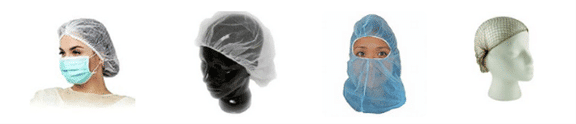
- Hair and beard net: There are many options in this area. Here are some examples in this photo.
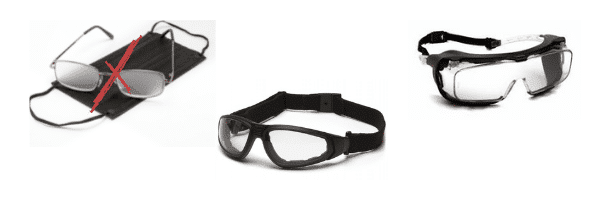
4. Safety glasses fogging up! Working with foggy safety glasses is impossible and frustrating! How can you solve this problem while still having scratch-resistant safety glasses and being effective? HASbuy some anti-fog, anti-scratch, skin-friendly safety goggles so that nothing can get in! Simply bliss! Of course, also use a cleaning product formulated for cleaning anti-fog glasses.
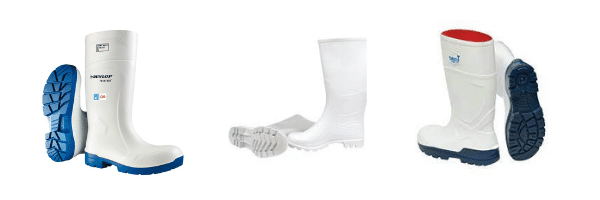
5. And finally, what can be done for the food washers that work in waterThere are excellent water boots, with steel toes and non-slip soles, formulated for the food industry! Booties can even be provided to make the boots even more comfortable.
So, I hope that this little overview of solution ideas can help you improve the health and safety of your employees. We would also like to point out that we have set up a health and safety training which specializes in the field of housekeeping. We look forward to meeting you there.