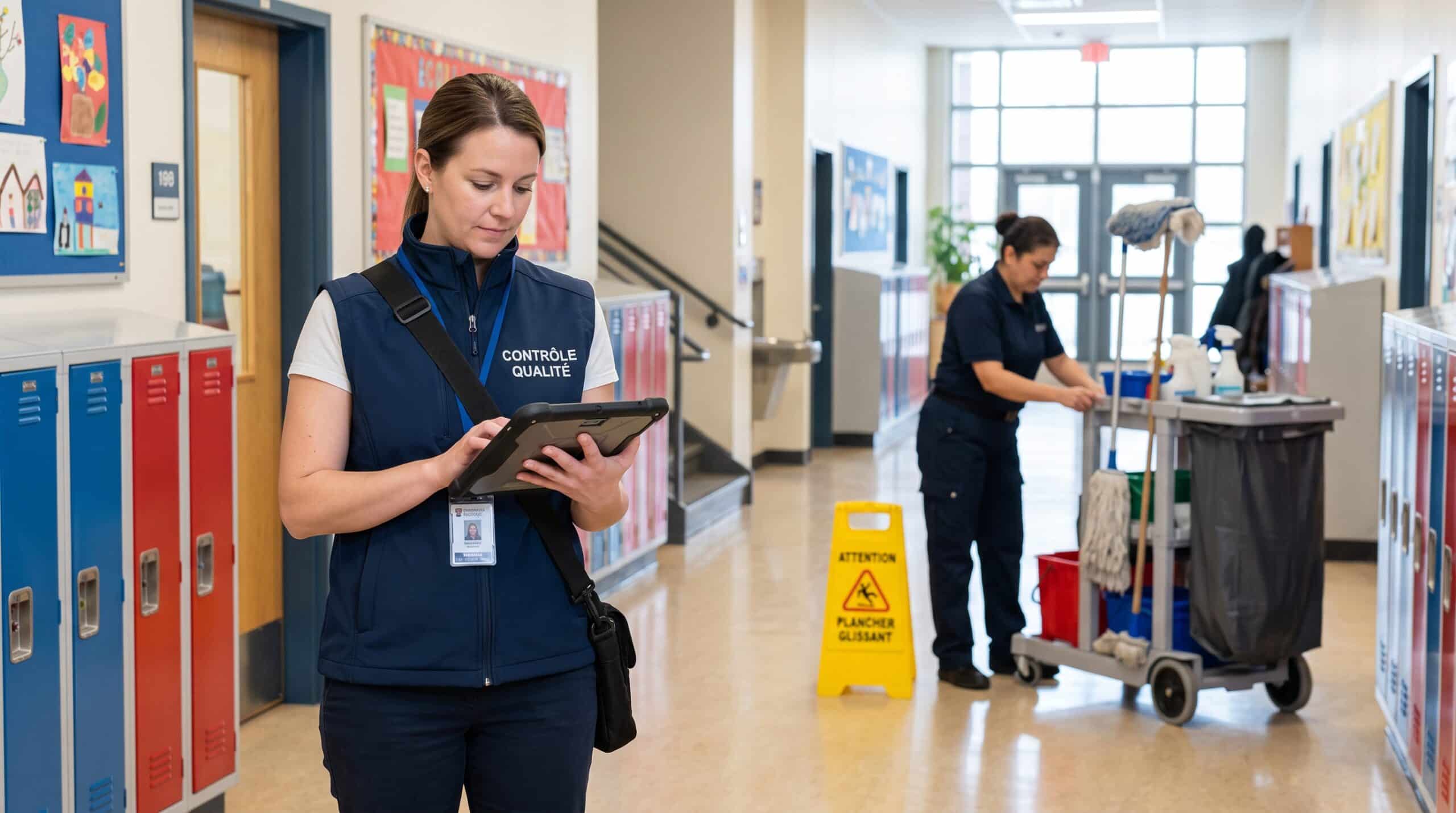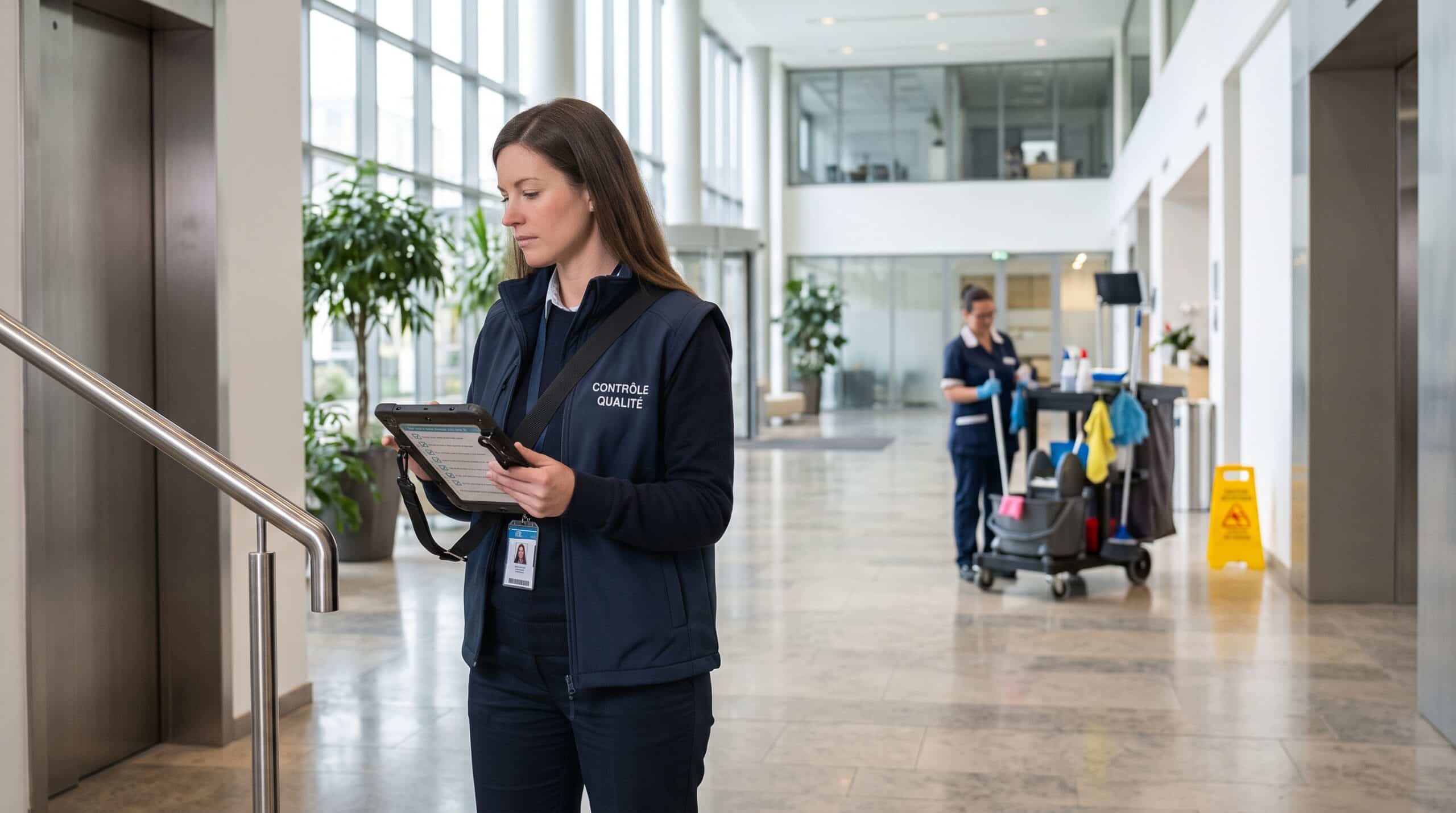

The job of a housekeeper is often underestimated, yet it is fundamental. The qualities and skills of a housekeeper are essential to guaranteeing the cleanliness, safety, and health of the occupants. Every surface cleaned plays a crucial role. Thus, each cleaned surface plays a crucial role in limiting the spread of bacteria. Each disinfected area contributes to maintaining hygiene. safe environments in schools, offices and healthcare facilities.
An often underestimated profession
Housekeeping is too often perceived as a job requiring "basic knowledge". However, the reality is quite different.
A maintenance worker learns to know every nook and cranny of the building. They observe the occupants' little habits and adapt their work to the condition of each space. They must manage their time precisely, respond to unforeseen events, and maintain consistent quality. And they also know how to be courteous and professional. They greet everyone, regardless of their mood. And yet, despite all these skills, they often go unnoticed… because they have mastered the art of discretion.
Too often, this profession is considered a job that requires no prior training. "Everyone does housework at home, right?"«
But maintaining high-traffic buildings is nothing like domestic cleaning. Each space has its own specific characteristics, constraints, and strict hygiene standards. The cleaning staff must know the right products and appropriate methods. They must adapt their work to each location and adhere to a tight schedule.
Essential skills and qualities
Having considered the essential personal qualities, it is equally crucial to master the technical skills necessary to perform this job safely and efficiently. This profession is often underestimated. It becomes clear that housekeeping requires solid skills and specific interpersonal qualities. It is not an "easy" job: it demands vigilance, rigor, and stamina.
A maintenance worker must demonstrate:
Autonomy : knowing how to manage one's priorities, organize one's work and resolve unforeseen events without constant supervision.
Sense of responsibility: Every task has a direct impact on the health and safety of the occupants. Employees must determine daily where to invest their time to maximize efficiency. For example, they know they can't spend too much time picking up every small item in an office—paper clips, confetti, or dropped papers. There are still high-traffic areas that require immediate attention. This ability to assess priorities and act accordingly makes all the difference.
Meticulousness and attention to detail: Nothing escapes his notice, from forgotten corners to hard-to-reach surfaces. But what really matters isn't spotting a paperclip that's fallen under a trash can. The important thing is to intervene where there's a real risk of contamination, to protect the health of the occupants.
Sense of organization :plan your route through the building and optimize your time and movements for maximum efficiency. This also means identifying the high-risk contamination contact points and ensure that they are cleaned and disinfected daily.
Excellent physical condition The job requires staying standing and moving for long periods of time, often handling equipment and products.
These combined qualities allow the’housekeeping employee to maintain impeccable, safe and pleasant environments, while remaining discreet and professional.
Essential technical skills
Beyond personal qualities, a housekeeping employee must possess solid technical skills. They learn to handle products, accessories, and equipment efficiently and safely. They adapt their methods to each surface or environment. The employee must also check critical areas, such as high-risk contact points, to protect everyone's health.
The challenge is real: most of the time, this training doesn't exist before work begins. Employees often start without any formalities or thorough instruction. This can lead to errors, accidents, or losses in productivity. In fact, this is one of the biggest problems in our field: a profession that demands expertise and vigilance, but which is still too often taught on the job.
Acquiring these skills not only ensures efficient work, but also prevents injuries and protects the health of the occupants.
Here is an article to explore some avenues regarding... human errors causing injuries.
Facilitating integration and success in the profession
For a housekeeping employee To ensure that it can begin effectively and safely, certain measures are essential:
Basic training of at least one day Introduction to methods, protocols, and equipment handling. Here is a detailed description of what a basic training. Note that for the healthcare sector, we recommend this instead. training in hygiene and sanitation in healthcare settings..
Clear product charter : a color code displayed in each maintenance room to easily identify products and their uses.
Introduction to equipment handling : learning to use machines and tools correctly, without risk of injury.
Training WHMIS 2015 basic : understanding chemicals, their dangers and good safety practices.
Clear and visual work plan : detailed plan of the premises to be maintained, indicating precisely what needs to be done and the method to follow.
- Products, accessories and equipment in good condition To work efficiently and safely, equipment must be functional. Unfortunately, the cleaning industry very often suffers from a lack of functionality. Underfunding, This complicates the work of employees and can harm the quality of service.
These initiatives help to reduce the risk of accidents, facilitate the transition to the profession, improve efficiency and increase employee confidence in their work.
Becoming an accomplished housekeeper
It is important to remember that no cleaning employee is perfect from the start. Skills, attention to detail, and mastery of techniques develop over the years, depending on the quality of supervision, training received, and experience gained on the job.
Every maintenance worker who progresses, learns, and hones their skills is an invisible pillar that ensures everyone's health and safety on a daily basis. Valuing, training, and supporting these professionals is an investment in the well-being of everyone in our buildings.