
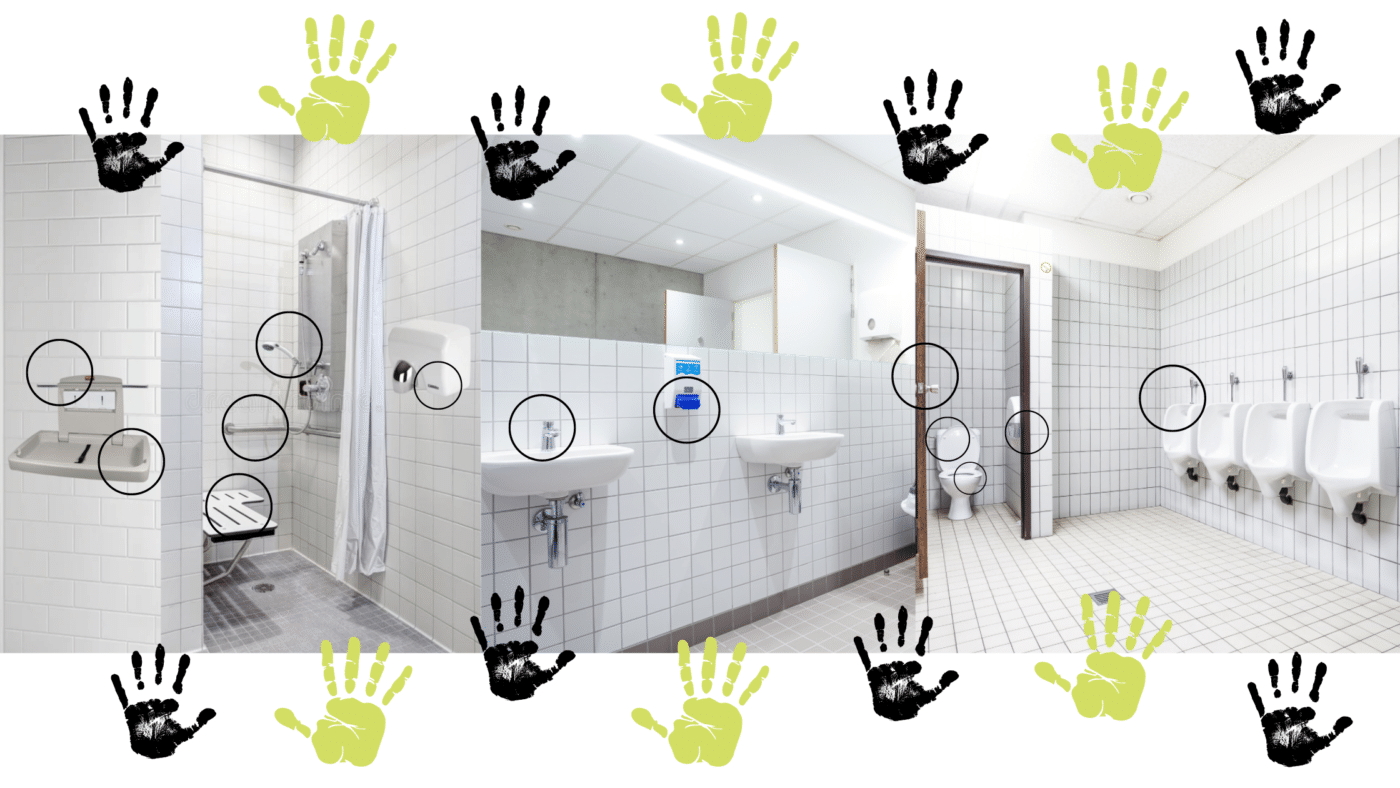
We often hear the expression "disinfecting high-risk contact points of contamination," or "disinfecting high-touch points." But what does that mean and how to identify these points in buildings? That's what we'll explore in this article.
High-risk contact point for contamination or disinfect high-touch areas
We can identify these points by naming the places where people most often place their hands. In the photo above, we've done the work for you to give you a concrete example. To get our brains working, here are some exercises below by type of room.
There are 3 elements to consider when determining disinfection frequencies:
- The risk by room typeFor example, a public bathroom is a riskier place than an office where only one person enters the room.
- The risk by ccustomersFor example, if it is an area where there are people who are already seriously ill, disinfection will have to be done much more frequently.
- Most affected areasHigh-touch areas will need to be cleaned more often. Such as door handles, light switches, chair armrests, patio door or window handles, etc.
Here are some examples by type of highly affected locations
Door and elevator
You'll notice where people put their hands frequently. It's not necessarily just on the doorknob.
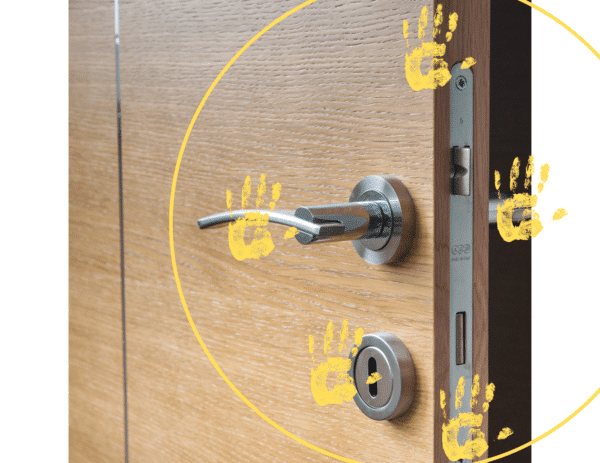
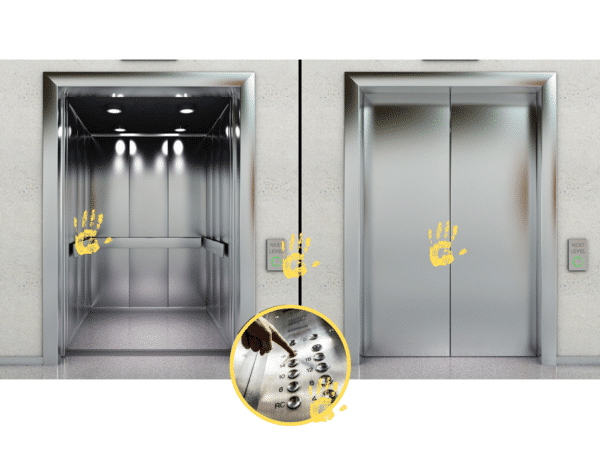
As you can see, I've already done the work for you for the last two exercises.
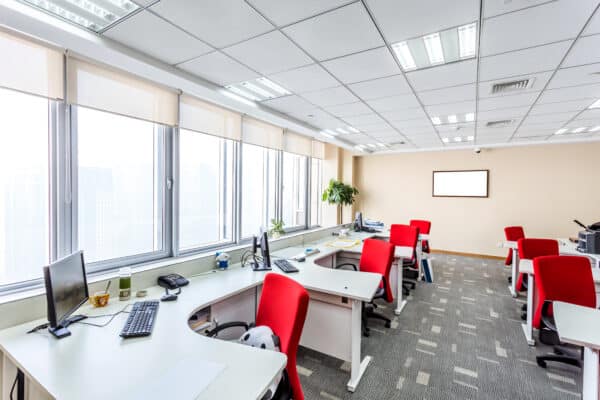
I'll let you circle the high-risk contamination contact points – High touch in the following spaces:
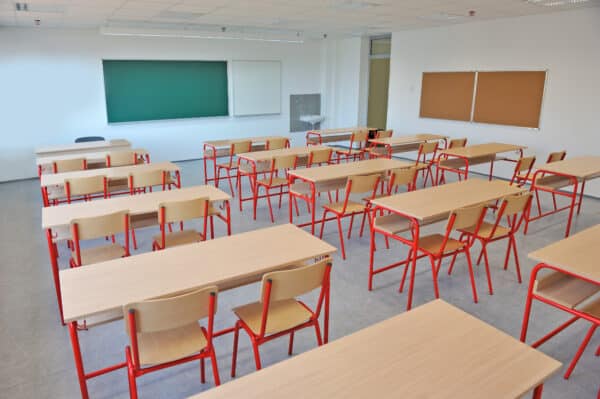
A good one-day training course is required at a minimum.
It's impossible to cover all the intricacies of being a housekeeper in a single article. We offer a great one-day training course to learn all the basic techniques and principles. Here are the dates of our upcoming training sessions:


)