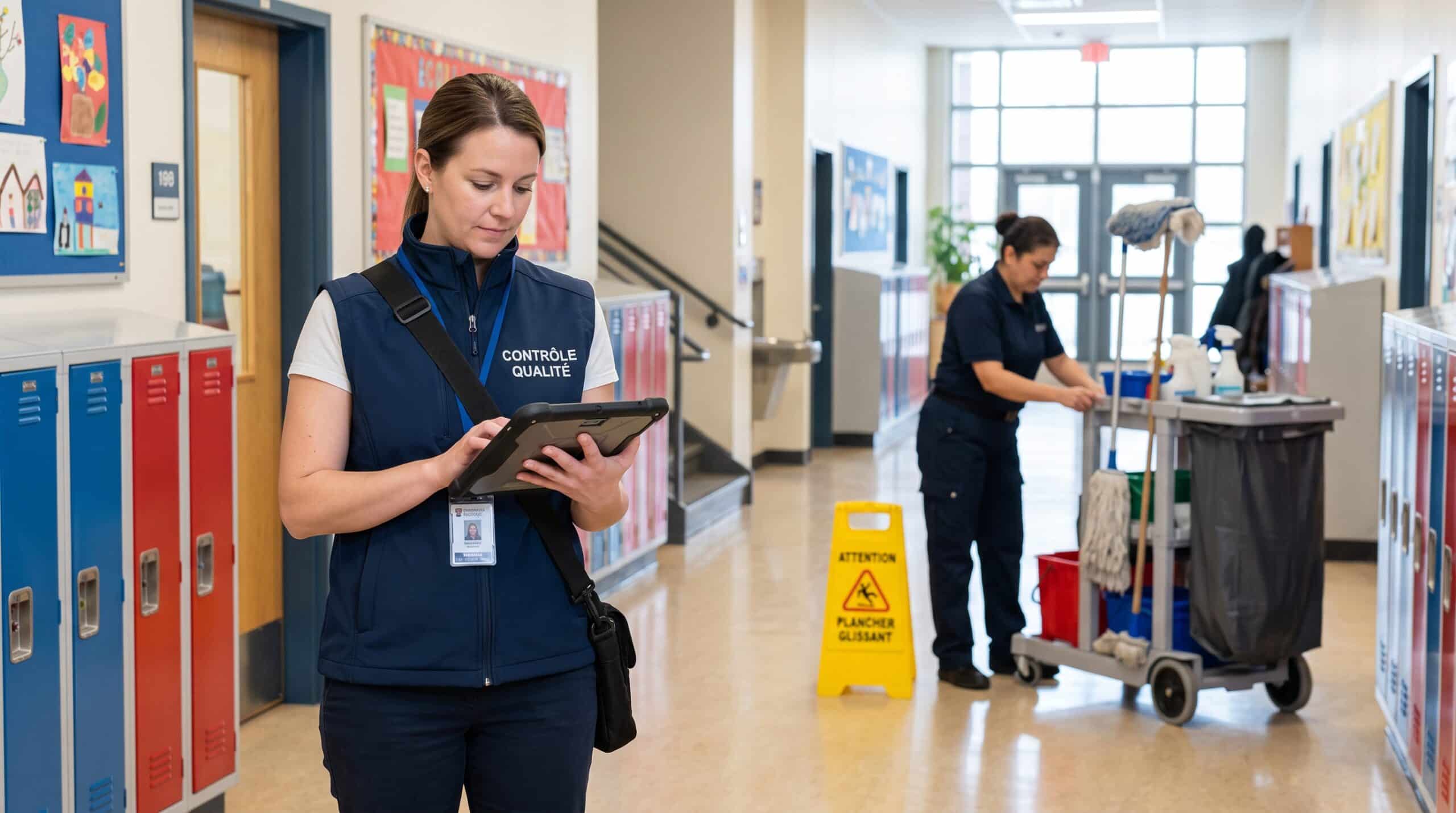

If your food factory was inspected today, would you be nervous?
If the answer to this question is yes, you must immediately take steps to get this situation back on track quickly. I just met a cleaning employee at a food factory. He was completely discouraged. He was asked to clean the factory as best he could and use whatever products he wanted. He looks at the factory and has no idea what to do to do an effective job. Where to start? What to use? Wash every day or once a month or a week?
The Food Safety Improvement Program (FSI)
A good place to start would be to complete the Food Safety Improvement Program. It contains seven prerequisite programs, as follows:
The premises
The exterior
The land where your factory is located is part of the space you must control. For example, debris on the ground must be continuously picked up. Who are your neighbors? Do they have pets? Or does their facility attract small animals? Are you close to a possible source of contamination? What can you do to better control your environment?
The interior
- Your walls and coverings must be designed to be easy to clean. They must therefore be smooth, non-porous, and resistant to deterioration. For example, they must not be finished with peeling paint.
- All doors must close securely, with no holes for vermin, birds, or small animals to enter (after all, a mouse can fit through 1/4 inch); garage doors must not be left open.
- Floors should be easy to clean. For example, they should not have any holes.
- Garbage, laundry, production, packaging, and receiving/shipping areas must be well-defined and prevent contamination. A traffic flow diagram may be necessary for this purpose.
- Ventilation and lighting must be adequate. For example, lighting is important for clearly seeing non-conformities. Ventilation must promote air circulation.
Sanitary facilities
- Facilities must facilitate employee hygiene. These must be properly maintained and follow a washing schedule.
- Handwashing stations should be intelligently located both within the factory and in employee areas. You will also need to ensure that hygiene measures are being followed.
Water, ice or steam
I've often worked in factories where employees had difficulty accessing sufficiently hot water. The water was hot during production. But by evening, when it was time to wash, the water was lukewarm. Hot water or steam is part of effective washing. Naturally, you'll also need to monitor water quality.
Vehicles and equipment in the establishment
Even if food, cleaning supplies, and other supplies are delivered by external suppliers, it's up to you to ensure they are thoroughly cleaned, free of holes and pests, and that the food is refrigerated at the correct temperature.
All materials used must be food-grade. For example, wooden materials should not be used, as they are not washable and can even crack.
The staff
Staff must be trained in proper manufacturing procedures. They will even be required to complete logs at various stages of the manufacturing process, including allergens, flow charts, washing and sanitation procedures, HACCP principles and risk control measures, and more. You will also need to ensure employees understand your training.
There are many non-conformities related to staff: wearing jewelry, not practicing good hand washing practices, wearing inadequate or missing hair and beard nets, actions that promote cross-contamination, etc. You will need to keep your staff always alert.
Sanitation and pest control
Food washing and sanitation is not at all comparable to office cleaning, for example. You will need to have a written laundry schedule and a pest control program. This must be followed by the staff. Employees will have daily logs to fill out. And you will need to systematically perform quality control, regardless of whether your employees are good or not. And quality control is also done in writing.
Laundry products must be factory-approved and food-grade. Just like your laundry accessories. You can't buy a broom at the grocery store, for example. Does it have to be food-grade? Why? Simply because food-grade laundry tools are designed to be easily washable; the bristles don't come off. And these brooms will adhere to your color code.
The recall system
Despite all the measures taken, you will also need to have a recall system in place in case of contamination. For example, if, following a quality control check, you discover that your product has been contaminated and you have to recall the products sold, would you be able to trace each of the products sold?
Operational prerequisite programs
You will need to control allergens, gluten and added sulfites and additives by preventing contamination risks.
You will even need to have a foreign material control program.
For example, if a glass packaging bottle breaks in the production room, you will need to have a glass breakage procedure in place to effectively control hazards. Hazards can be physical, microbiological (e.g., from vermin), or chemical (e.g., from detergents).
Ultimately, you can't improvise.
So, thinking back to the employee who was assigned the task of cleaning and sanitizing the factory without any further support, he or she will obviously need help. You can't think of cleaning a factory the same way you would an office space. This last article wasn't written to discourage you.
Here is an article that might at least lay the groundwork for what you need to make a effective food washing.
In addition, the site of theCanadian Food Inspection Agency is an excellent source of information
I hope this article will inspire you to seek the help you need. CF Health can of course support you in this process towards the safety of your food.